How can I prevent my Sofa from being too large?
Inspiration
A Sofa is too large for your living room if it takes up more than two-thirds of the available wall length, limits the walking space around it to less than 80 centimeters, or creates a visual imbalance with the rest of the furniture. Choosing the right sofa size is all about the specific proportions of your space, not just the number of seats you want. In this article, we answer the most frequently asked questions about sofa dimensions, proportions, and style choices that determine whether a Sofa enhances or overwhelms a space.
As a rule of thumb, a Sofa should not take up more than two-thirds of the width of the wall along which it stands. In a 4-by-5-meter living room, a Sofa with a maximum width of 240 to 260 centimeters will fit comfortably, provided there is at least 80 centimeters of walking space around it. This keeps the room functional and visually balanced.
In addition to width, seat depth is also a key factor. A deep Sofa of 100 centimeters or more creates a lounge-like look, but in a narrow living room, it can make the space appear much smaller. A seat depth of 85 to 95 centimeters is the most balanced choice for most living rooms: comfortable enough for extended sitting, yet compact enough to let the space breathe.
The height of the backrest also plays a role. A low, horizontal backrest leaves more of the wall visible and makes the room feel more spacious. Tall backrests add warmth and intimacy, but require a larger space so they don’t overwhelm the room.
Before choosing a Sofa , measure the available floor space, not the total size of the room. Note the width of the wall along which the Sofa will be placed, subtract the space needed for doors, windows, and passageways, and then determine how much walking space you want to leave on the front and sides of the Sofa . This will give you the maximum sofa length and depth.
Next, use painter’s tape to mark the exact outline of the Sofa on the floor. This way, you can immediately see if the sofa’s dimensions fit the living room and if there’s enough space left for a coffee table, side table, or other furniture. This is a simple but very effective way to prevent a Sofa from turning out to be too big once it’s in place.
Don’t forget to check the accessibility of the space: doors, stairwells, and narrow hallways also determine what sofa dimensions can physically be brought inside. Modular sofas offer a practical advantage here, since the individual sections are transported separately.
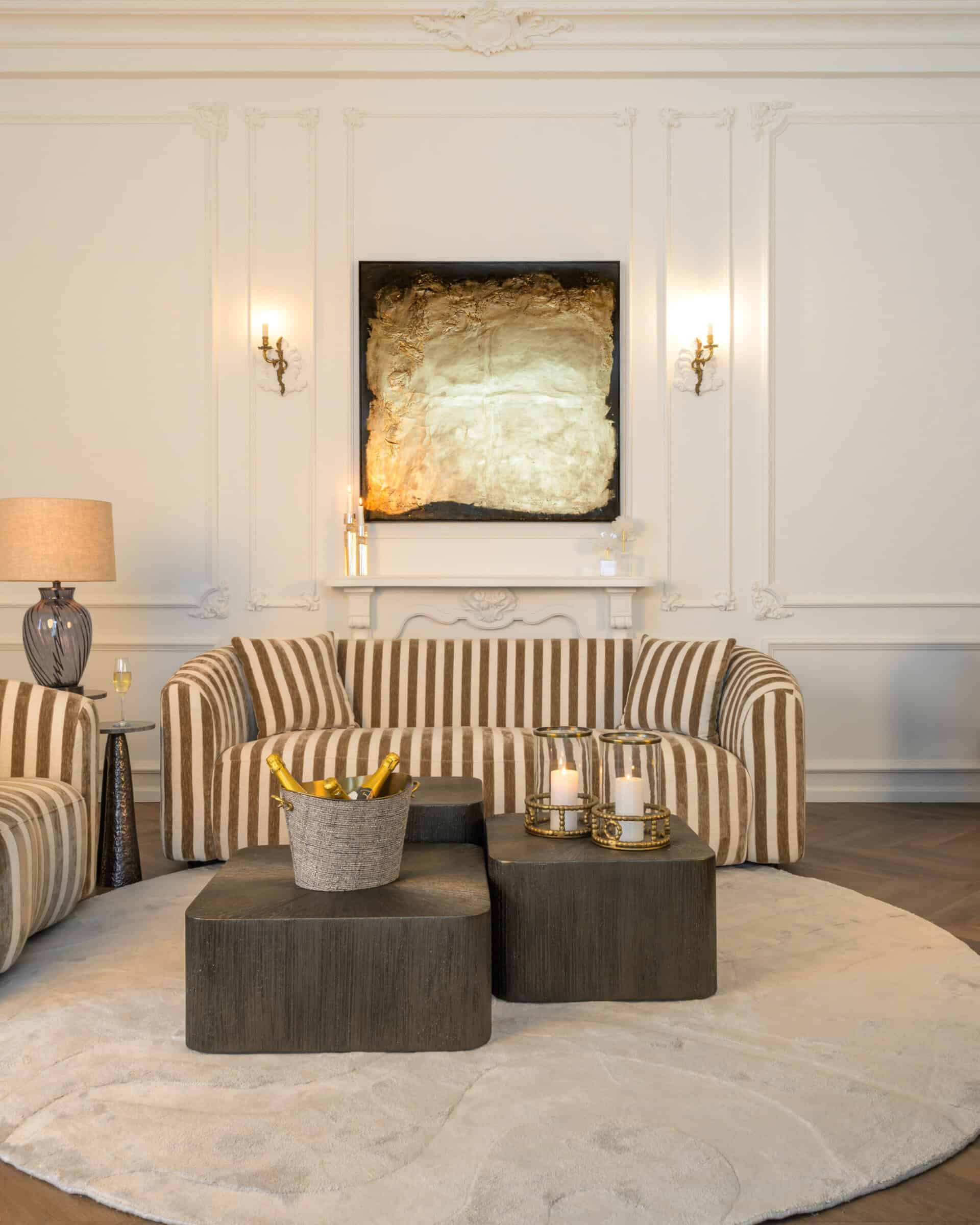
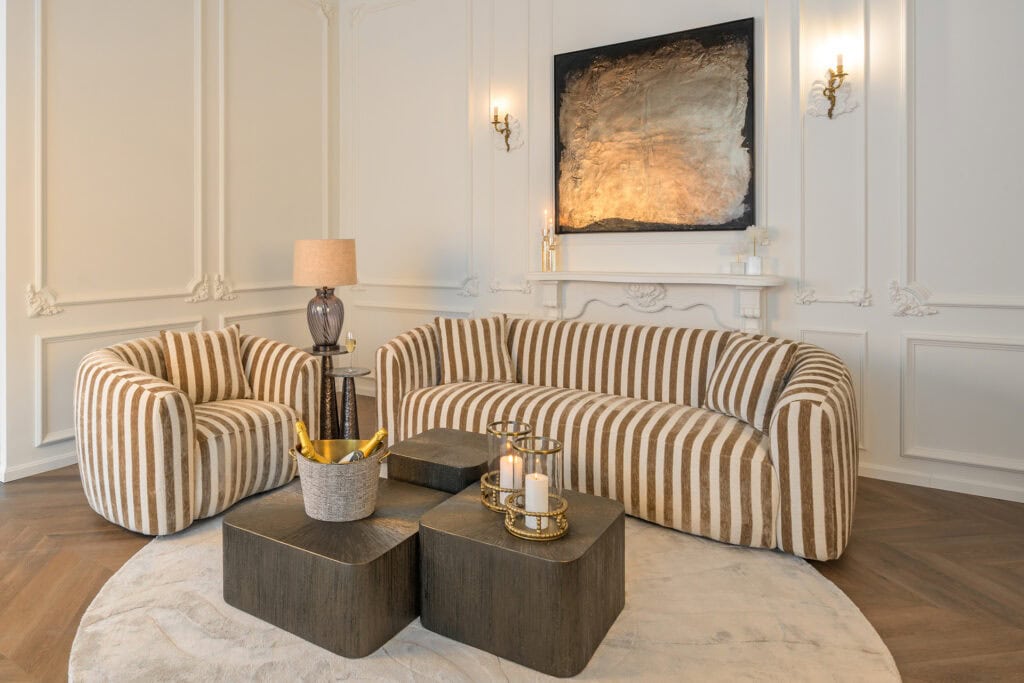
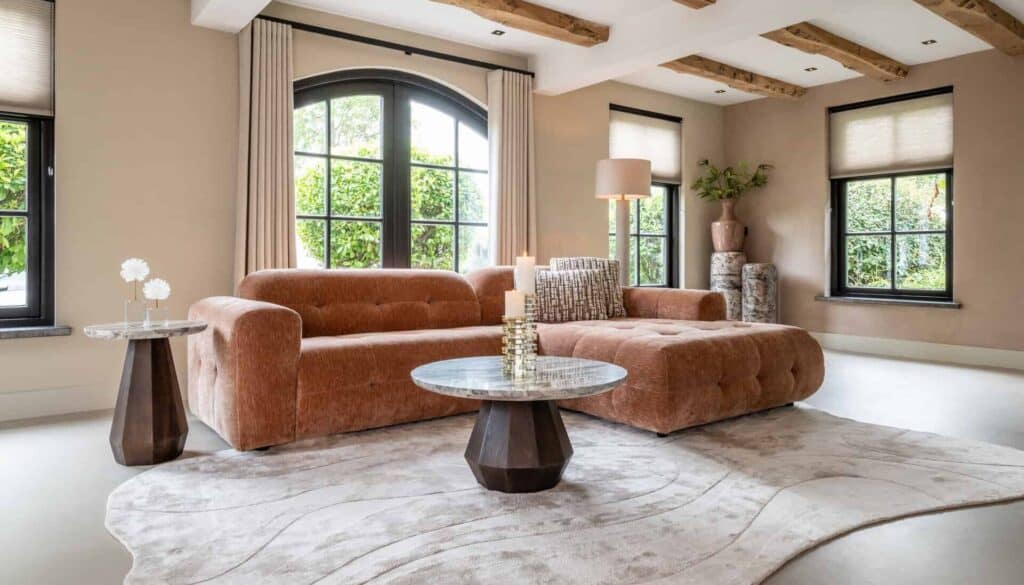
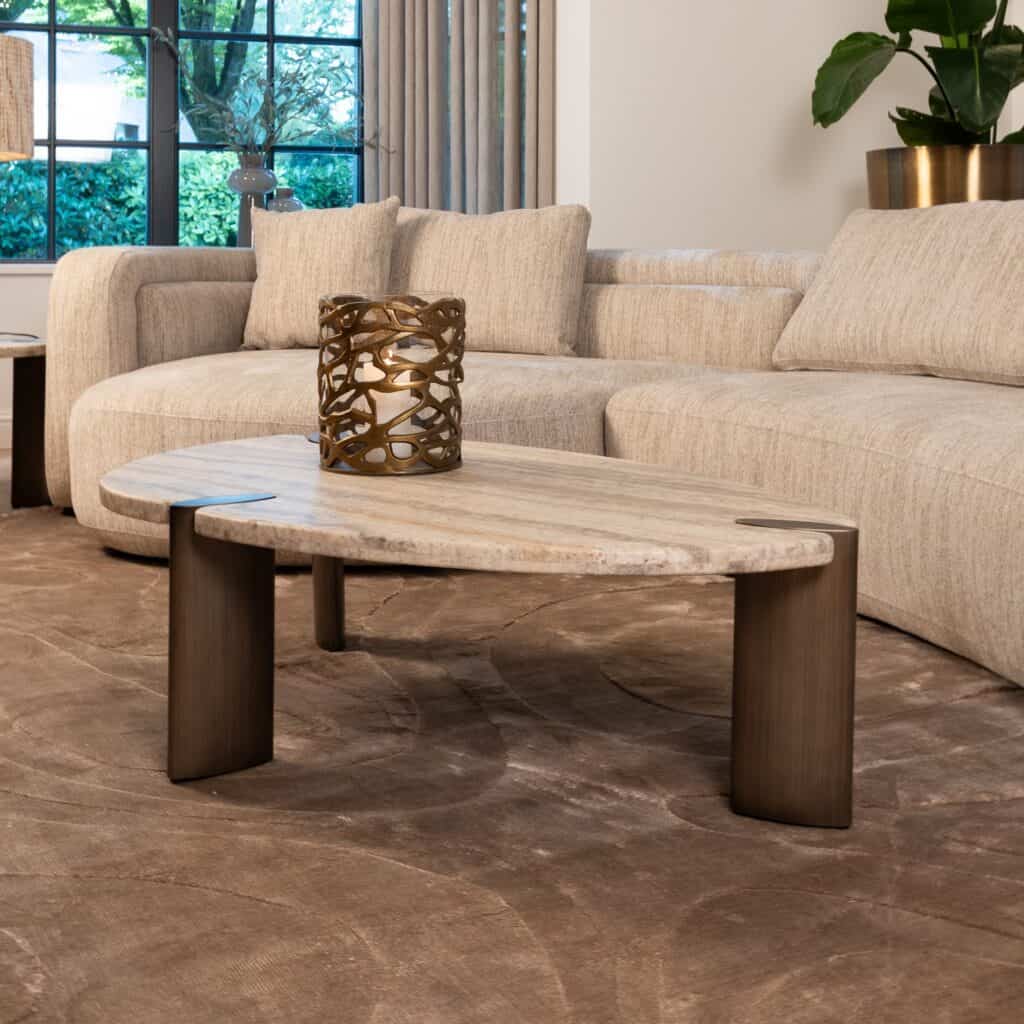
The ideal coffee table is two-thirds the length of the Sofa and is placed 35 to 45 centimeters from the edge of the seat. This proportion creates visual harmony and practical ease of use: you can reach the table without bending over, and the table looks like a deliberate design choice rather than a separate element.
In terms of height, the coffee table should ideally be the same height as the seat height of the Sofa, or no more than 5 centimeters lower. A table that is too low disrupts the visual balance; a table that is too high gives the ensemble a stiff, formal look that doesn’t fit with a contemporary interior.
The materials and shapes reinforce the relationship between Sofa and the table. A round table softens the lines of a straight, sleek Sofa and improves the flow of traffic in more compact living rooms. A rectangular table in marble or travertine pairs well with a Sofa featuring warm, fabric upholstery, where the contrast between hard and soft adds character to the space.
Sofas with exposed legs, a low back, and light or neutral upholstery make a room appear larger. Exposed legs create a visual flow across the floor, making the room feel less cluttered. A low back leaves more wall surface visible, which contributes to a sense of height and openness.
Color and texture play a major role. Light shades such as sand, off-white, taupe , and light gray reflect more light and give the space an airy feel. But even a darker Sofa doesn’t have to make a space feel smaller, as long as it’s used sparingly and the surrounding area remains light and open.
A sleek, linear sofa design without prominent armrests or thick cushion sets looks slimmer and less bulky. That makes a difference in spaces where every centimeter counts. Avoid overly decorative details, such as wide, padded armrests, if space is already limited; in that case, opt for a Sofa with a refined, minimalist silhouette.
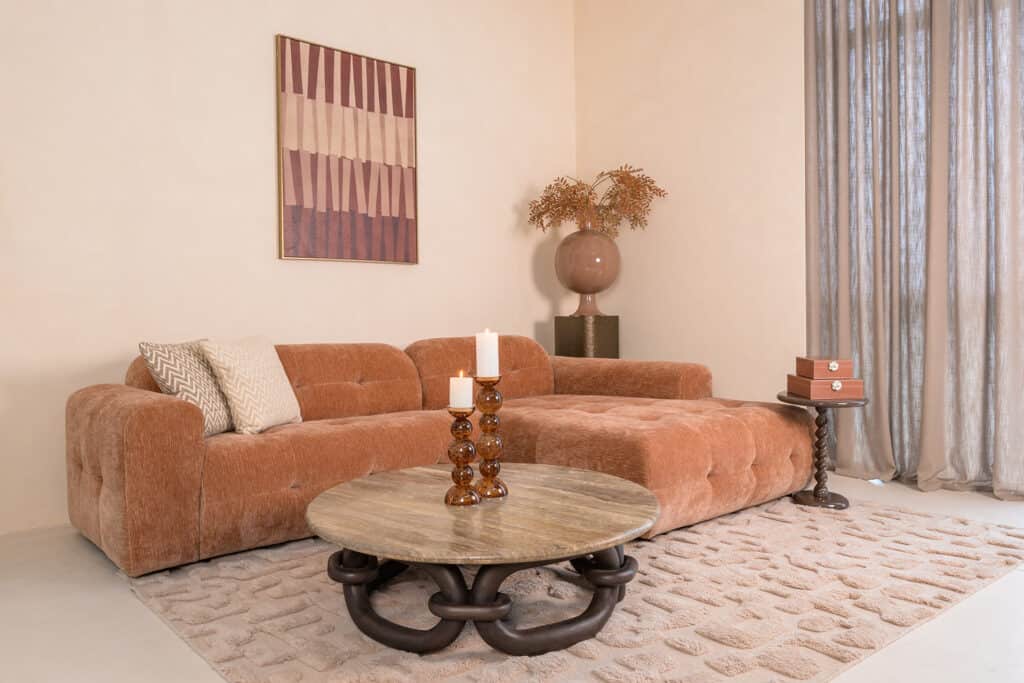
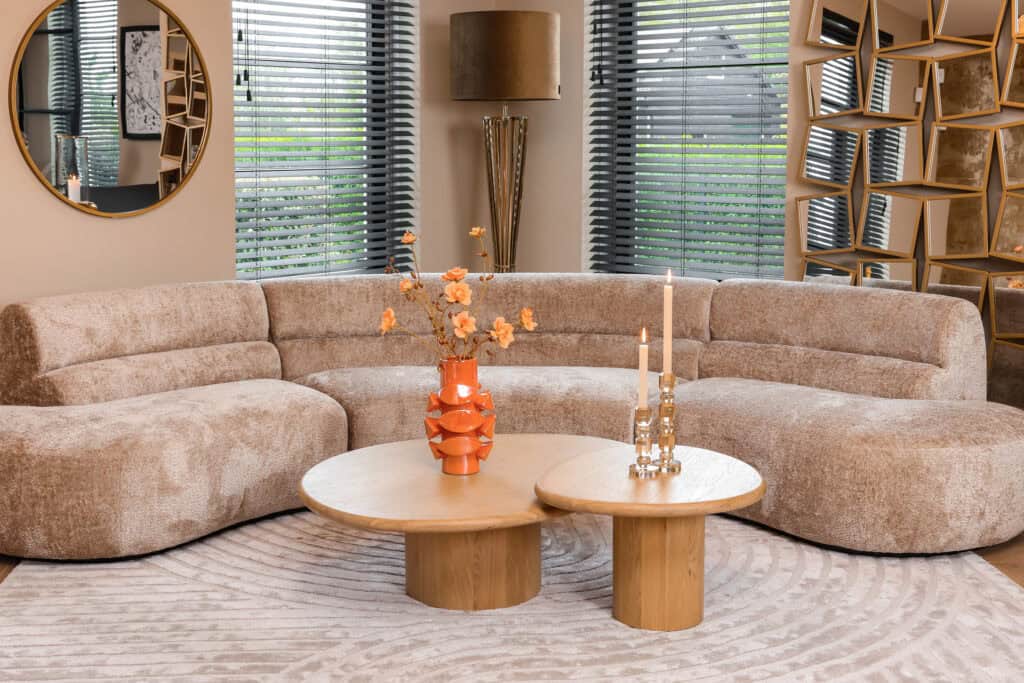
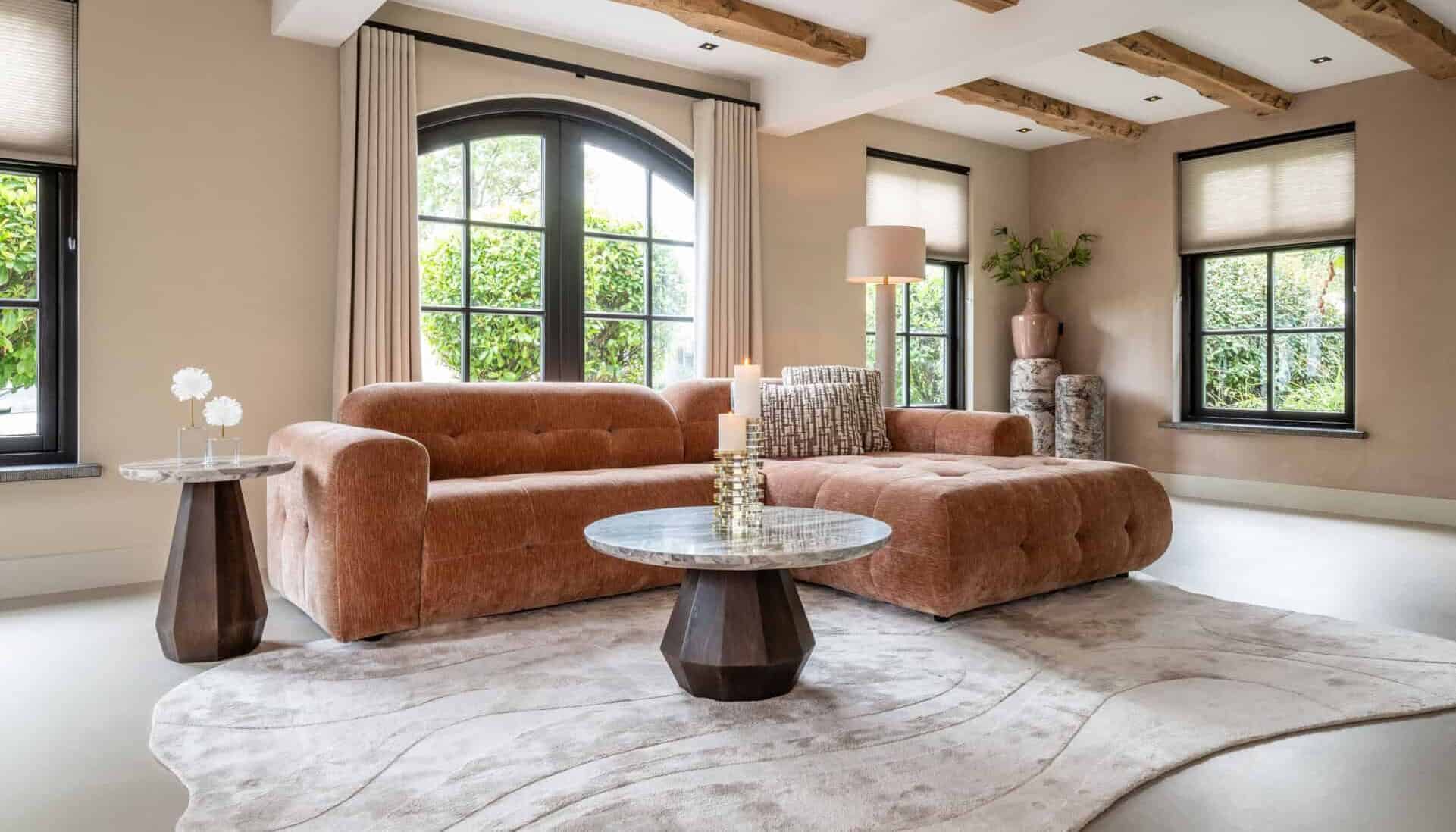
A corner sofa is a better choice than a straight one Sofa if you want to structure a large, open living room, define a distinct seating area, or accommodate several people comfortably without adding extra individual chairs. In open-concept spaces, a corner sofa provides a focal point and a sense of intimacy to the seating area.
In a smaller living room, a corner sofa can actually be more space-efficient than a straight Sofa with separate armchairs, because it makes use of two walls and leaves the central floor space open. However, this only works if the corner sofa is custom-made to fit the available corner. A corner sofa that’s too large for a small space will completely dominate the interior.
Modular corner sofas offer the most flexibility: you decide on the configuration yourself and adapt it to the shape and size of your living room. That makes them particularly well-suited for those who want to be able to adjust the layout of the room to changing needs.
Regrets when purchasing a new Sofa almost always stem from one of three causes: the wrong dimensions, upholstery that feels different in practice than expected, or a style choice that doesn’t match the rest of the interior. All of these pitfalls can be avoided by experiencing the Sofa in person before making a final decision.
Measure your living room accurately and mark the dimensions on the floor as described earlier. Consider not only the length, but also the depth, the height of the backrest, and its position relative to windows, doors, and other furniture. Also check whether the Sofa can be practically carried through the entrance to your home.
When choosing materials, let the look you want to create guide you. Bouclé adds texture and warmth; velvet lends depth and a certain richness to color; leather and faux leather are durable and timeless. Each material reacts differently to light and contributes in its own way to the atmosphere of a space. That’s something you can only fully understand when you see and feel the material in person.
For us, it’s about more than just furniture. We help you make the right choices based on form, material, proportions, and atmosphere, so that a Sofa not only fits in your living room but truly belongs there. We do this in the following ways:
Would you like to learn more about the options available, or are you curious about which store is closest to you? Please contact us or visit Experience Center for a personalized consultation about your interior design.