Which coffee table goes best with my Sofa?
Inspiration
The ideal coffee table for your Sofa is one that matches the Sofa and the surrounding space in terms of height, size, and style. As a rule of thumb, the table height should be equal to or slightly lower than the seat height of the Sofa, and the table should span roughly two-thirds of the sofa’s width. The questions below will help you make the right choice step by step.
A coffee table goes well with a Sofa when its height matches the seat height of the Sofa, or is at most a few centimeters lower. In most interiors, that’s somewhere between 38 and 45 centimeters. As a guideline for length, the table should span about two-thirds of the sofa’s width, so that the proportions remain balanced.
The distance between Sofa and the coffee table is just as important as the table’s dimensions. A distance of 35 to 45 centimeters allows enough space to sit and move comfortably, without the table feeling like a distant island in the room. If the sofa is deep or extra wide Sofa , the table can also be slightly larger, provided there is still enough space to walk around it.
Also consider the shape in relation to the sofa arrangement. For a straight Sofa , a rectangular or oval coffee table usually works best. A round table offers more flexibility in the arrangement and looks less austere, which can actually add the desired softness to some interiors.
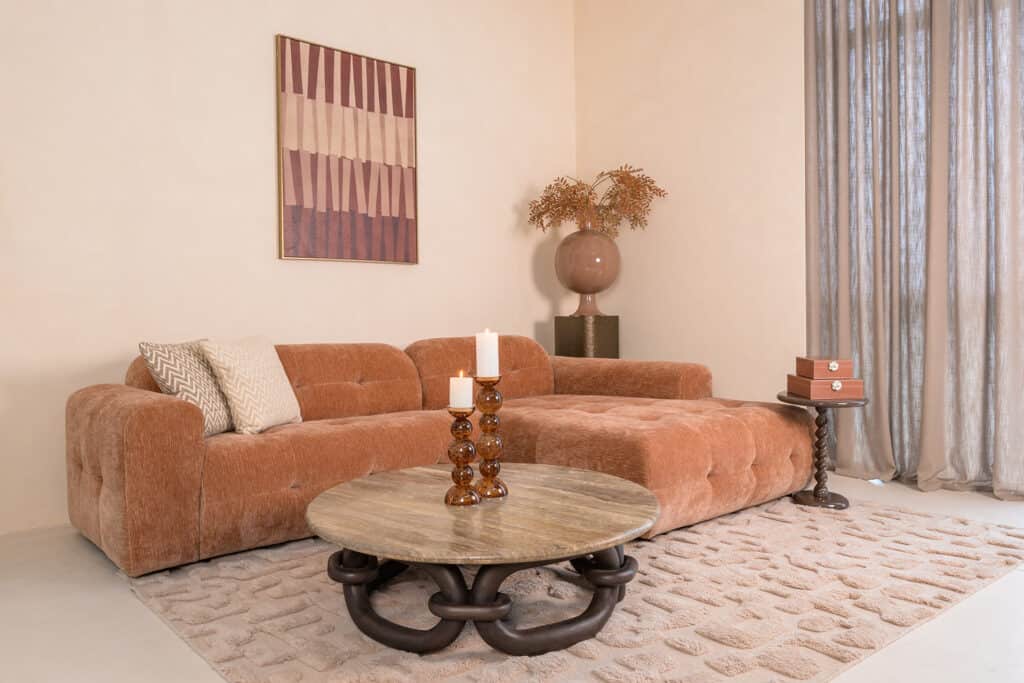
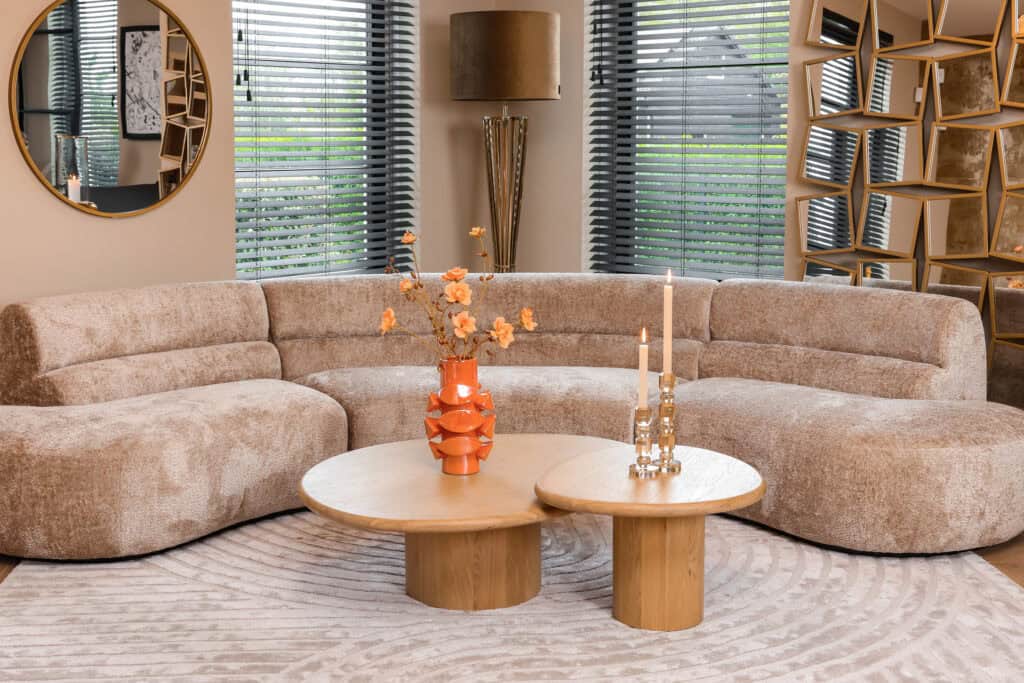
With a corner sofa, a coffee table works best when its shape complements the size of the Sofa and doesn’t disrupt the layout. A spacious rectangular or square coffee table gives the corner sofa a solid focal point and creates a cohesive composition. Round tables are also an option, but they require a larger diameter to maintain the proper proportions.
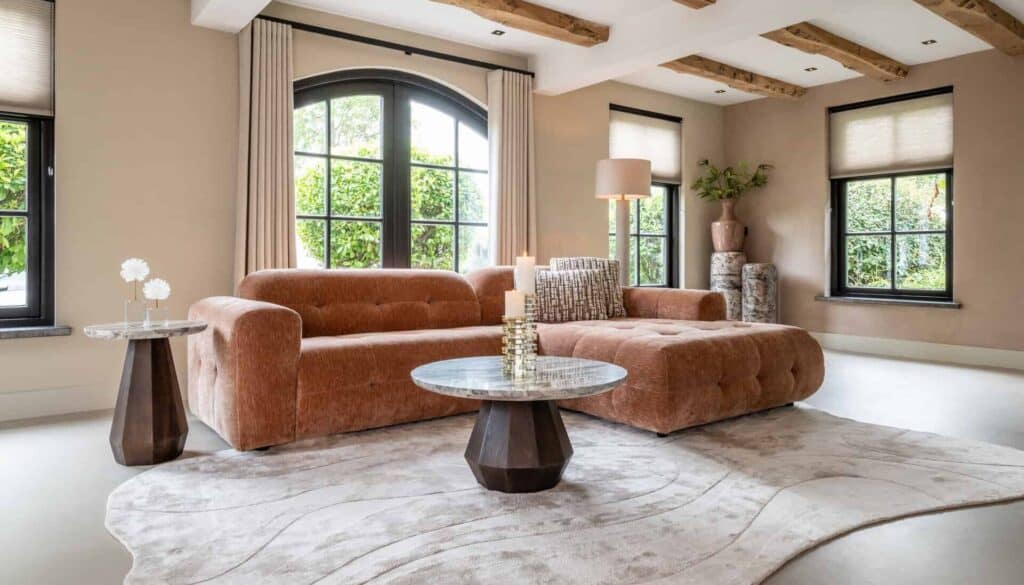
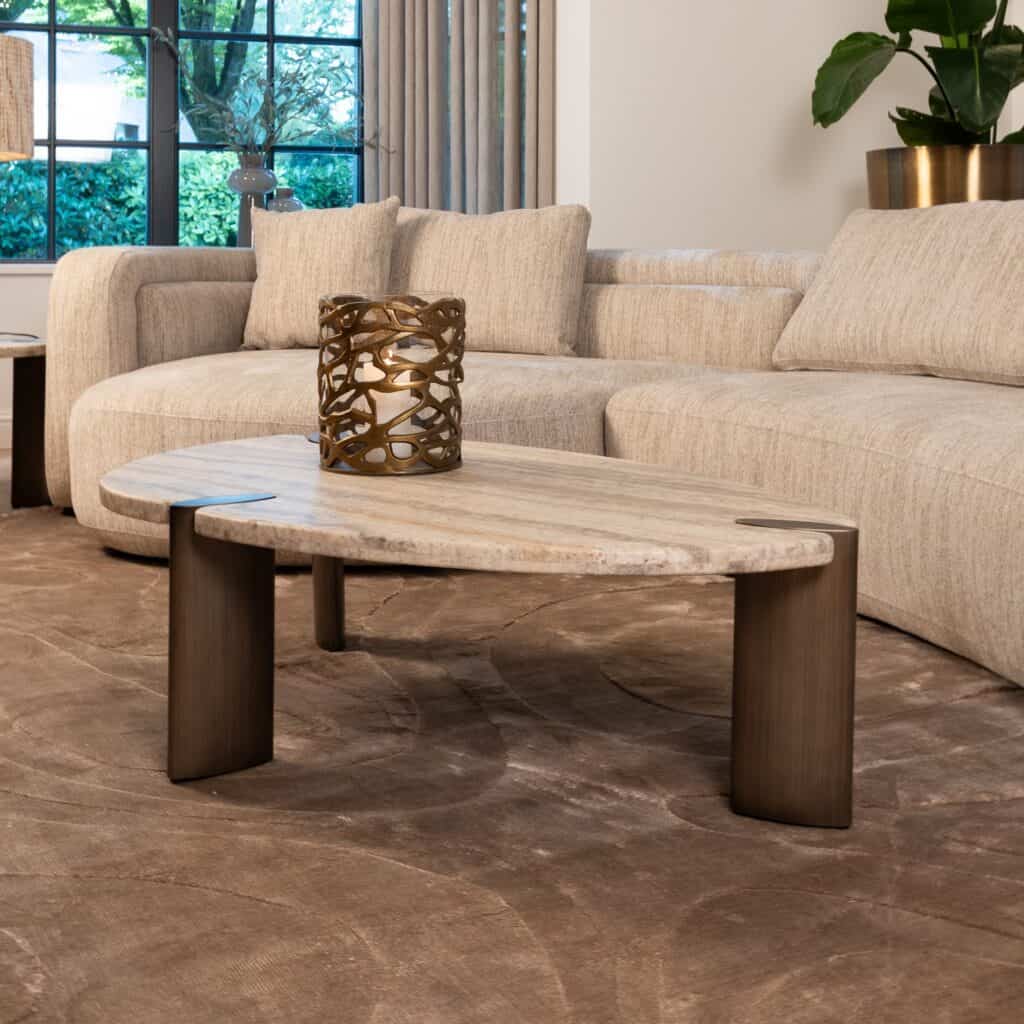
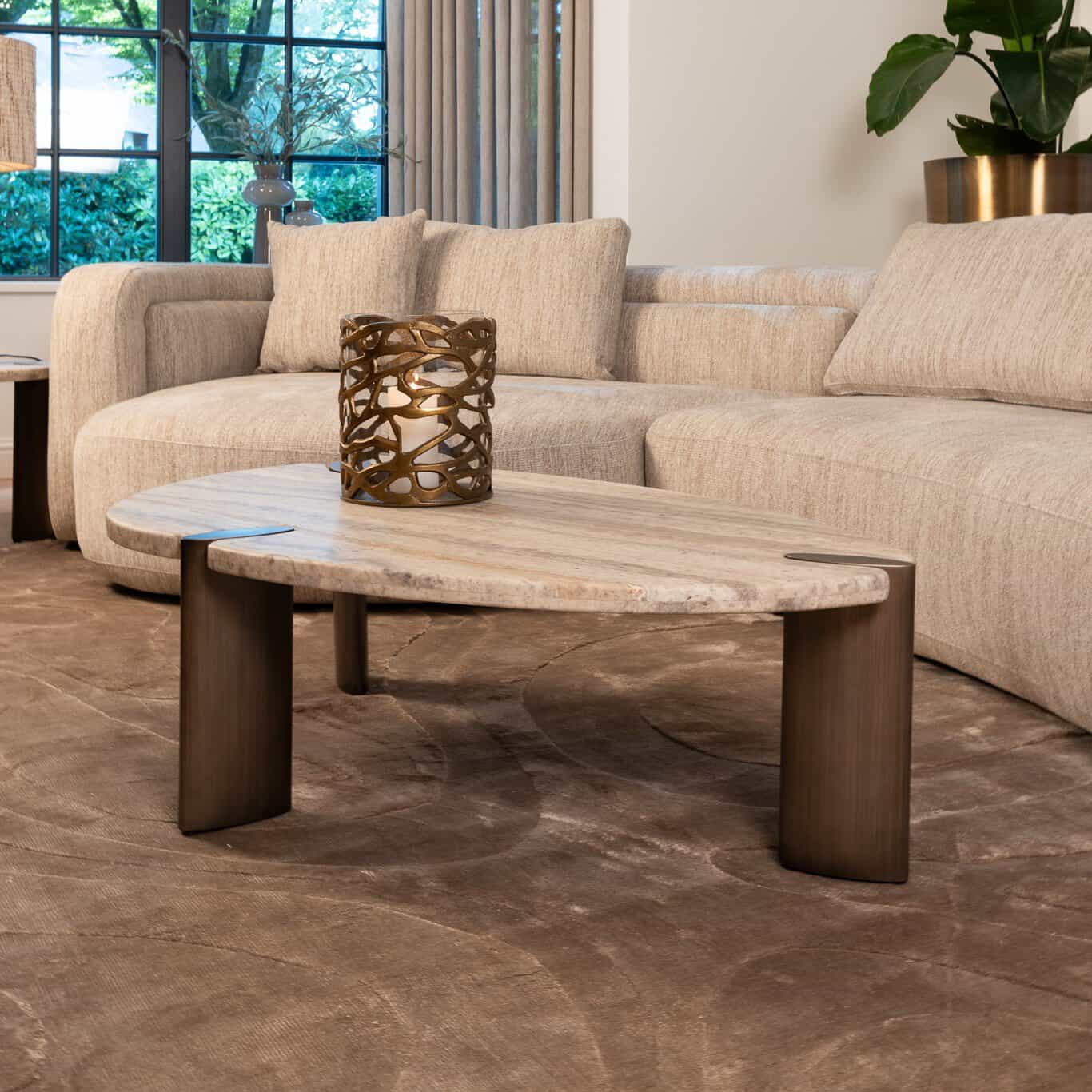
In terms of style, a corner sofa already makes a strong statement in the room. A coffee table that adds an accent through its material or color enhances the overall look without competing with it. Think of a tabletop with a natural stone look combined with a sleek metal base. The texture of the tabletop draws the eye, while the base remains light and open.
When paired with a corner sofa in a warm fabric such as velvet or bouclé, a table with brass or gold-colored accents adds warmth and depth to the arrangement. The reflective quality of brass allows light to dance throughout the room and gives the arrangement a refined, sophisticated look.
No, a coffee table certainly doesn’t have to be the same color as the Sofa. A tone-on-tone combination can be beautiful, but a deliberate color contrast or change in material gives the interior more character and depth. The power lies in the interplay of texture, tone, and form—not in mirroring colors.
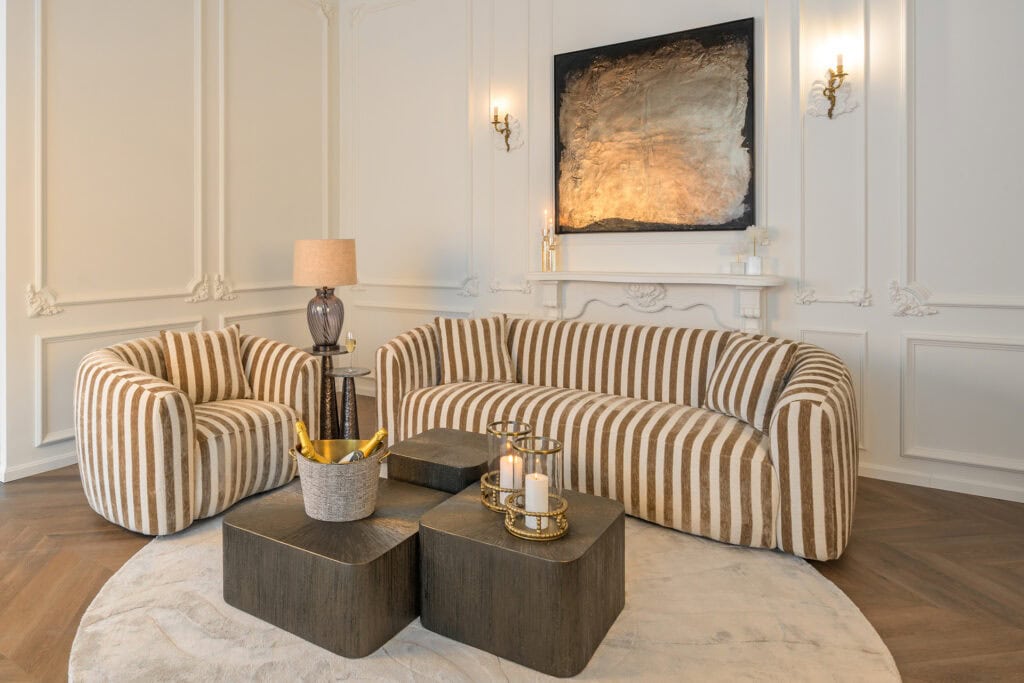
A light Sofa in a warm beige or cream shade pairs well with a dark wood or stone tabletop. The contrast creates visual interest without making the space feel cluttered. Conversely, a dark Sofa works beautifully with a light, matte tabletop that keeps the space feeling open.
What is important, however, is that the tones fall within the same color temperature. Warm tones with warm tones, cool tones with cool tones. When this balance is right, the material and color can differ greatly from one another and still feel like a cohesive whole. A table with a travertine finish—with its characteristic soft beige tones and organic texture—therefore fits into virtually any warm interior setting, regardless of the color of the Sofa.
The best material for a coffee table depends on the atmosphere you want to create and how the space is used. Wood adds warmth and an organic feel, natural stone adds weight and texture, glass makes a space appear larger, and metal adds structure and a more industrial or luxurious touch.
A tabletop with a natural stone look, such as travertine or marble, is one of the most timeless choices in high-end interior design. Travertine has a warmer, more organic look than polished marble. The stone’s soft color variations and slight porosity give the surface a sense of life and depth. Combined with flowing shapes and warm fabrics, it creates an interior that feels both modern and soothing.
Wood, whether used as a tabletop or a base, brings a natural warmth that is hard to match with other materials. The grain pattern and variation in tone give each piece its own unique character. Metal bases—especially those made of brass or matte gold —add a refined detail that catches the light and gives the composition a high-quality finish. This combination of wood and metal is therefore one of the most versatile in contemporary interior design.
Yes, a coffee table can be too big for the living room. When the table takes up too much floor space or restricts the walking space around the Sofa , it disrupts the balance in the room and can quickly make the seating area feel cramped. A good balance between the furniture and the space is key to the atmosphere of the interior.
As a general guideline, there should be at least 35 to 45 centimeters of free space on all sides of the coffee table. This keeps the space functional and allows the interior to “breathe.” In smaller living rooms, a round or oval table can be helpful, as the absence of sharp corners makes the space appear visually softer and more spacious.
In more compact spaces, consider combining a smaller central coffee table with one or two side tables. This arrangement offers more flexibility, is easier to adapt to the situation, and prevents a single large piece of furniture from dominating the space. Moreover, playing with height and size in such a combination opens up interesting design possibilities.
A coffee table is a larger, central table placed in front of the Sofa and serves as a functional and visual focal point for the seating area. A side table is smaller, lighter, and easy to move around. Side tables are typically placed next to the Sofa or an armchair and are intended as an accent piece, not as the centerpiece.
The difference also lies in the arrangement you create with them. A coffee table defines the proportions of the seating area and gives the space structure. Side tables add detail and layers. They come in all sorts of heights, shapes, and materials, making them ideal for creating focal points, adding a brass or marble detail, or bringing a playful touch to a minimalist interior.
In many contemporary interiors, coffee tables and side tables are deliberately combined. Two or three side tables of varying heights placed next to a smaller central table give the seating area a layered, organic look that appears more rich and full than a single large table alone. The variation in height also creates a dynamic silhouette in the room.
For us, it’s all about collections designed with a clear design vision, where materials, form, and finish are in harmony. Whether you’re looking for a coffee table that complements a corner sofa, a table with a travertine look, or a set of side tables that gives the space a curated feel, our collections offer a wide range of options.
Discover our complete collection of coffee tables online, or visit our “Experience Center ” in Heerhugowaard to see the materials and finishes in person. Would you rather find a retailer near you? Then check out the list of official Richmond resellers and get personalized advice there.