How do you choose the right dining table for your dining room?
Inspiration
The right dining table is more than just a functional piece of furniture—it’s the centerpiece of your dining room, the piece that sets the mood, structures the space, and sets the tone for the entire interior. The choice depends on three interrelated factors: the proportions of your space, a shape that fits the layout, and a choice of materials and style that complements the rest of your interior. In this article, we answer the most frequently asked questions about choosing the right dining table, from dimensions to materials and style.
A dining table requires at least 60 centimeters of width per person, and you should allow at least 90 centimeters of free space on all sides of the table to allow for comfortable movement and standing up. For a table seating four people, you should aim for at least 120 by 80 centimeters; for six people, at least 180 by 90 centimeters.
Always start by measuring your dining room before choosing a table. Make a note not only of the floor area, but also of the location of doors, windows, and walkways. A table that fits on paper may feel too cramped in practice once chairs are placed around it and people are walking around it. In a luxurious interior, proportions are just as important as aesthetics—a table that commands the space without dominating it lends the entire room a sense of calm and elegance.
Don’t forget about the height, either. The standard table height ranges from 74 to 76 centimeters. If you’re pairing the table with designer chairs or dining chairs that have a higher seat, always check to make sure there’s enough knee room. The relationship between the table and the chair determines both comfort and the visual balance of the space.
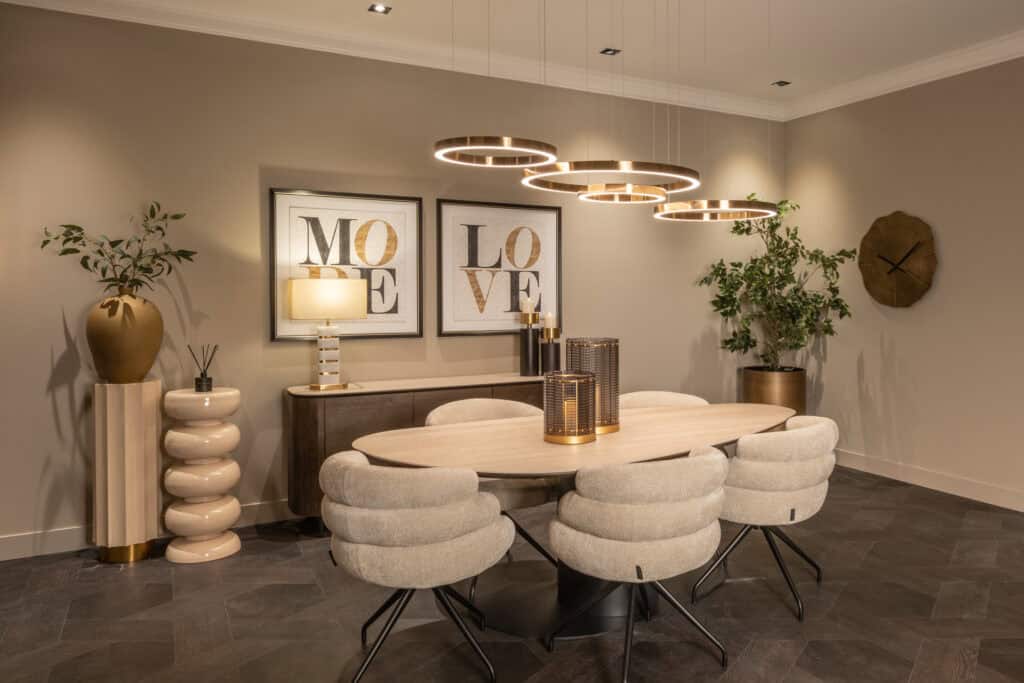
The shape of a dining table determines the feel of the space and how many people can sit comfortably around it. Rectangular tables work best in elongated spaces, round tables work well in square rooms and encourage conversation, and oval tables combine the advantages of both shapes. But shape is also a design choice: a sculptural base or an unexpected contour can transform a space.
The rectangular table is the most popular shape, and for good reason. It fits into virtually any dining room and offers plenty of seating per square meter. Sitting at the head of the table gives the space a classic, formal look that complements an interior with character and depth. The base plays a crucial role here: slender metal legs lend the table a sense of lightness, while a solid wood base or a cast base anchors the space and adds weight.
A round table has no corners, which means everyone sits on equal footing and conversation flows more easily. The absence of corners also makes the table appear softer—a quality that works well in interiors where organic shapes and natural materials predominate. An oval table offers the same sense of connection and softness, but it also fits into an elongated dining room without overwhelming the space. The oval shape has an inherent elegance that is difficult to match with a straight line.
The material of a dining table sets the tone for the entire room. Solid wood brings warmth and an organic texture; ceramic exudes cool precision and durability; travertine or a marble-like texture adds depth and a mineral richness. The choice isn’t just a matter of maintenance—it’s a statement about the character of your interior.
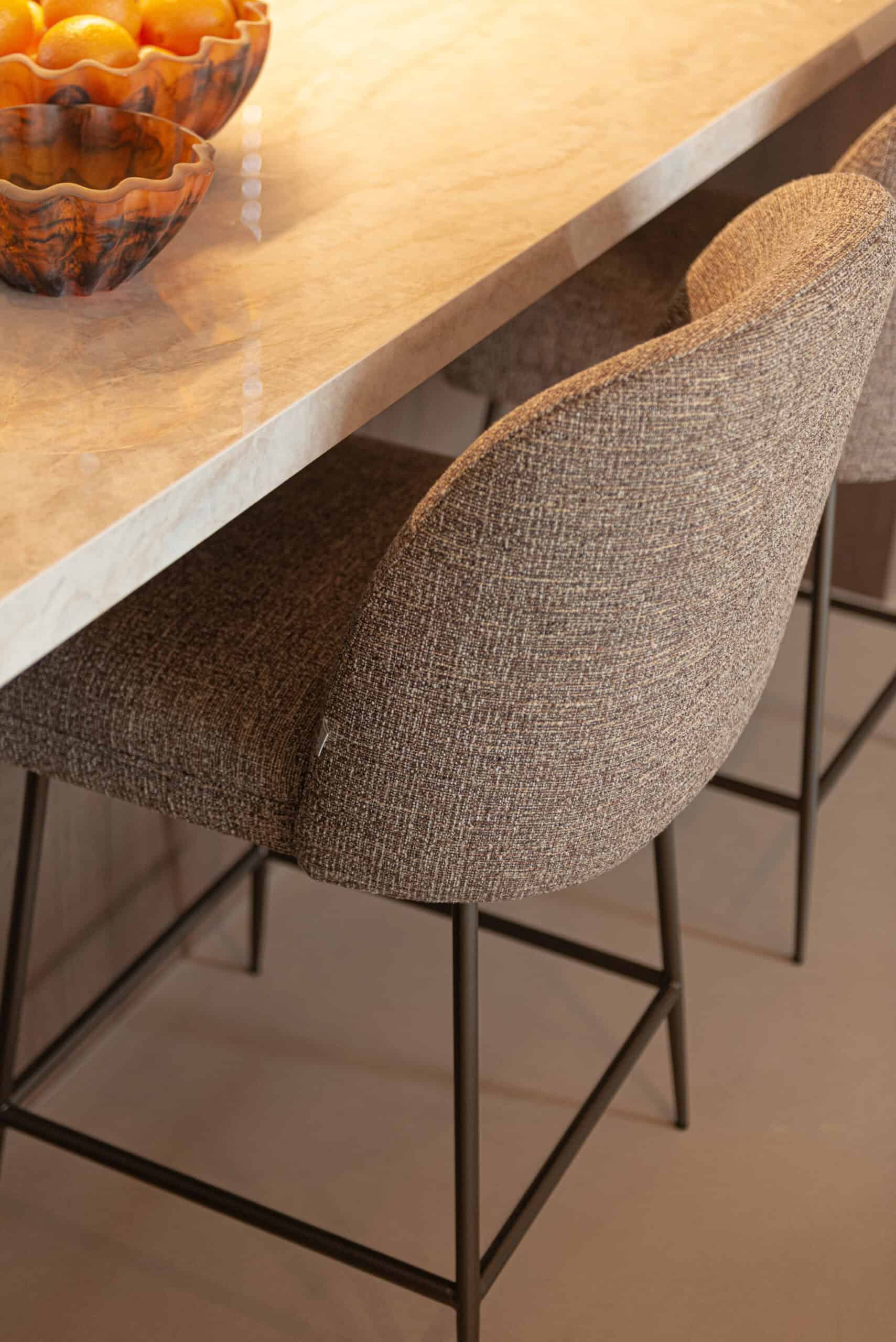
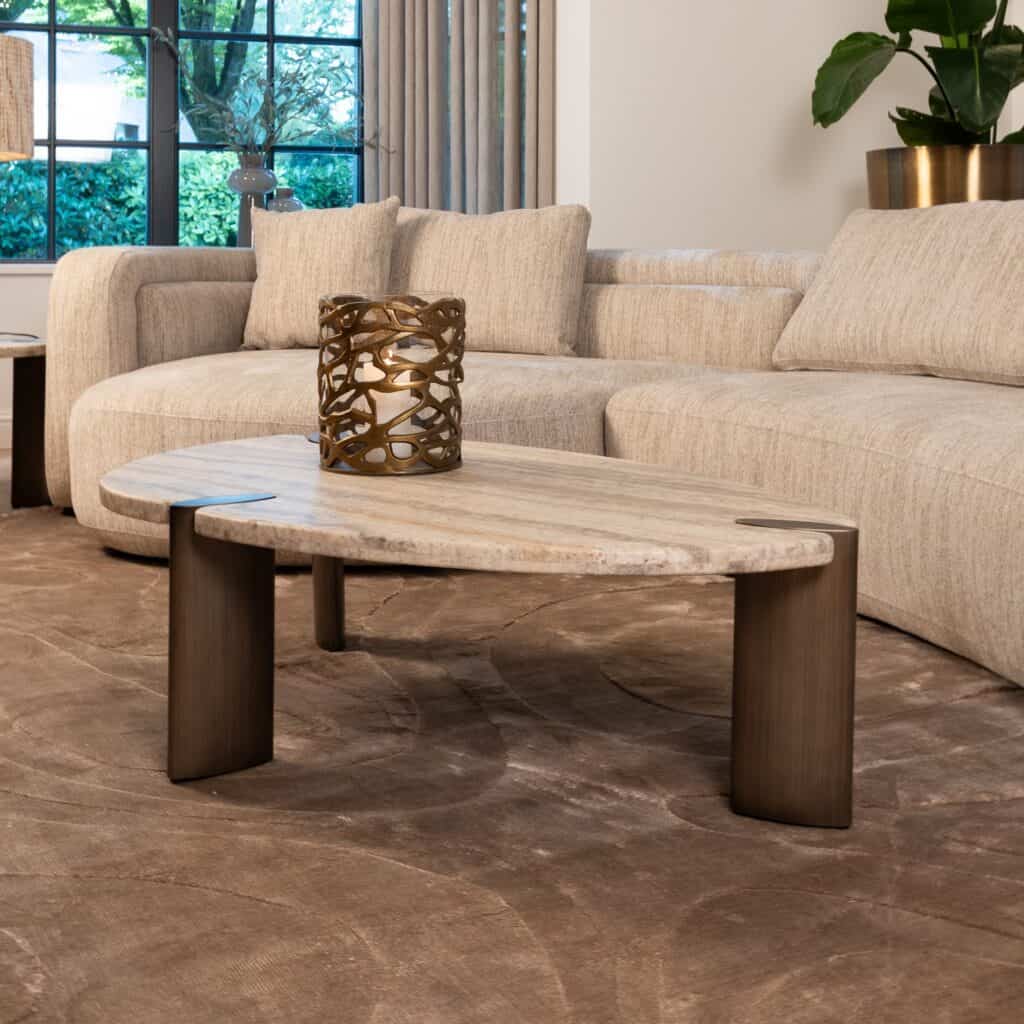
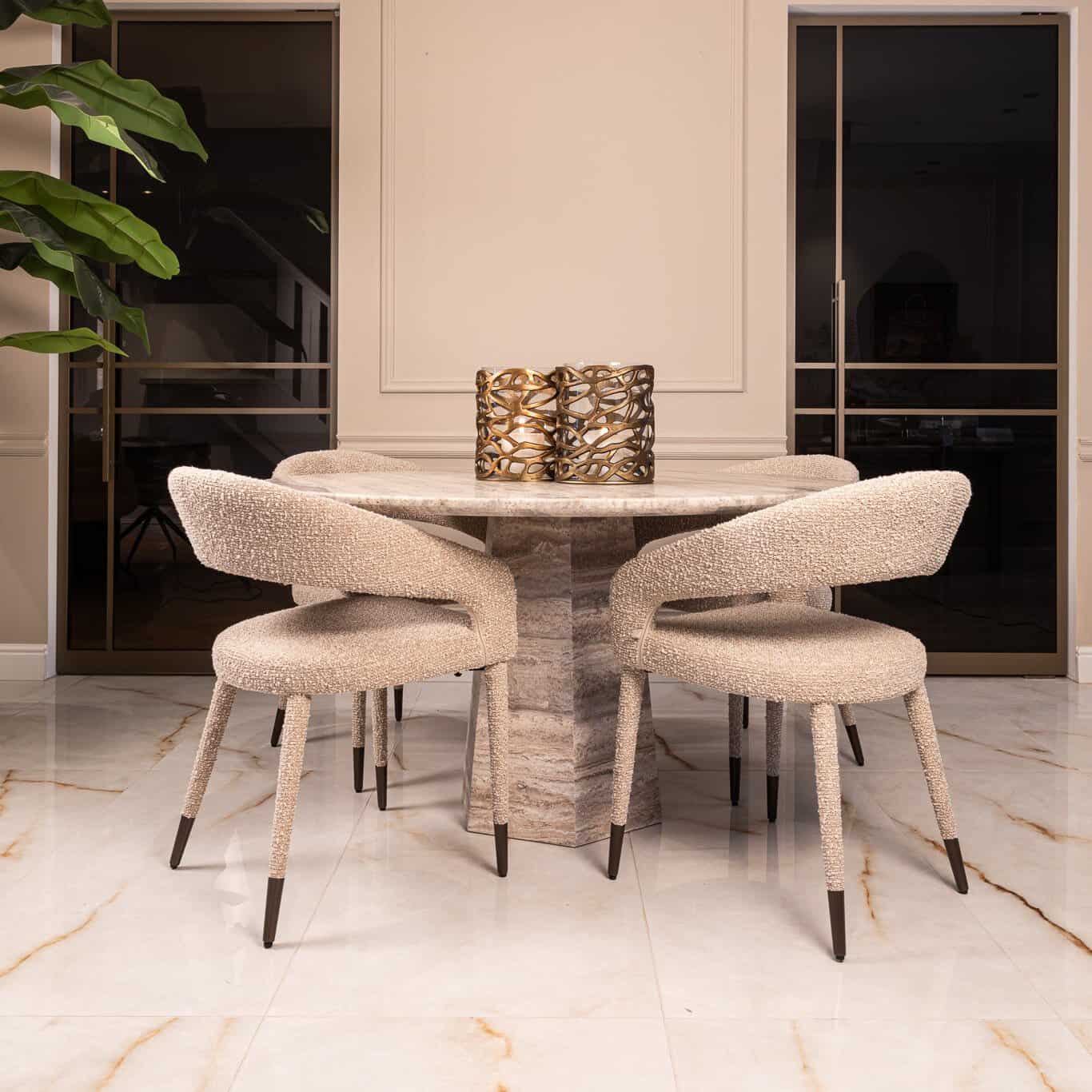
Travertine and travertine-textured finishes are currently very popular in luxury interiors. The warm, subtly textured surfaces reflect light in a subdued, natural way that polished materials simply cannot match. When you pair a travertine countertop with a base made of brushed brass or warm bronze, the interplay between the materials instantly lends the space depth and sophistication.
You can coordinate a dining table with your interior by considering the color palette, materials, and style. A table doesn’t have to be identical to other pieces of furniture, but it should belong to the same family. Contrasts can work well if they’re applied consistently.
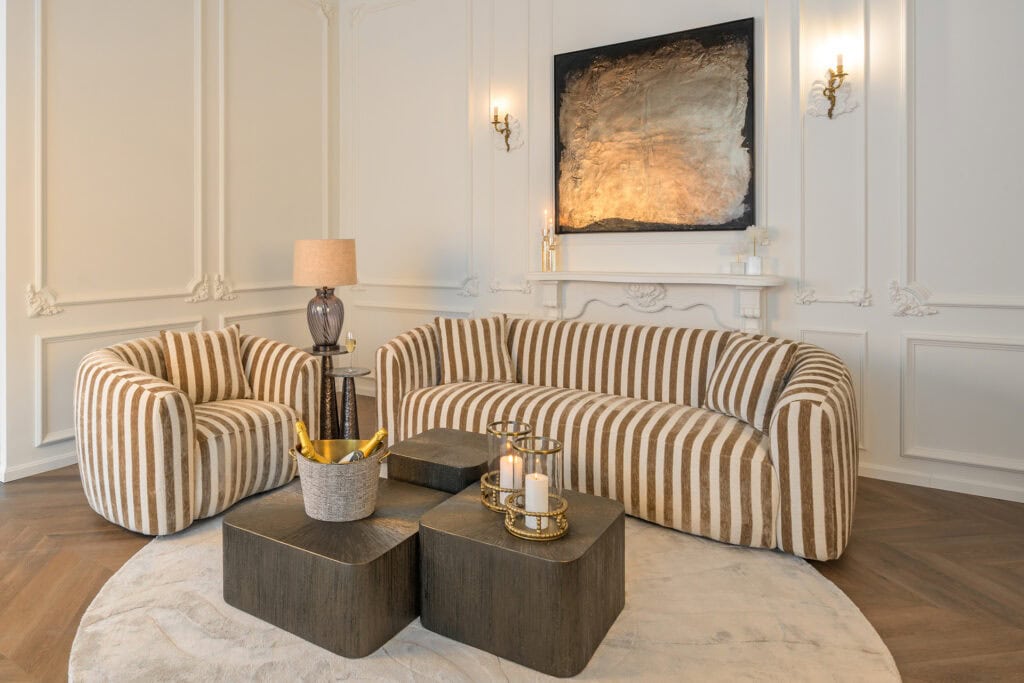
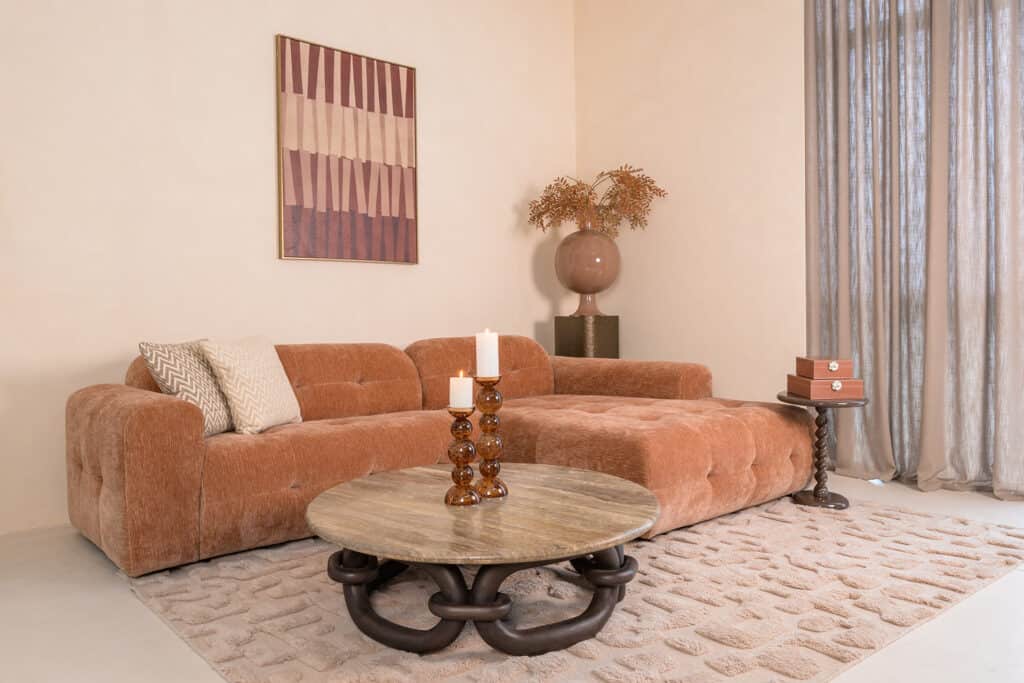
Start with the floor and walls. A dark wood floor calls for a table that doesn’t get lost against it, but also doesn’t clash with it. A light travertine-look or a ceramic tabletop in a warm neutral shade creates just the right balance. If you’re pairing a metal table base with brass or gold accents, make sure that warm metallic color is also reflected in the lighting or decorative accessories—this creates an interior that feels like a cohesive whole.
Don’t forget the dining chairs. They don’t have to be made of exactly the same material as the table, but they should fit within the same stylistic framework. A sturdy table with a heavy base calls for chairs with volume and a rich fabric such as velvet or bouclé. A sleek ceramic table with a slender base calls for chairs with clean lines and a understated material like leather or woven fabric. It’s this interplay between textures, shapes, and weights that elevates a dining room from good to exceptional.
You should choose an extendable dining table if you regularly entertain guests but usually have fewer people at the table on a daily basis. An extendable table gives you the flexibility of a large table without your dining room always feeling cramped. This is also a smart choice if your space is more compact but you don’t want to compromise on your ability to entertain.
When choosing an extendable table, pay attention to the extension mechanism. Modern extension mechanisms are smooth and stable, and high-quality models leave no visible seam in the tabletop when the table is extended. Also check that the table legs are positioned so that people can sit comfortably at the ends, even when the table is extended. A well-designed extendable table maintains the same strong silhouette in both positions.
An extendable table with an extension leaf integrated into the table itself is the most elegant and practical solution for everyday use—with no separate leaves and no compromise on style.
A luxurious interior calls for dining table styles that combine high-quality materials, a striking silhouette, and refined details. Think of tables with a ceramic or marble top, a brushed metal base, or a solid wood top with a sculptural leg. The style can be bold, as long as it complements the rest of the room.
Prominent design trends for a luxurious dining room in 2026:
The Dulce collection is a prime example of organic modern design: the travertine texture and undulating forms lend character and elegance, and pair beautifully with warm fabrics and gold accents. Tables like these feel both contemporary and timeless—a quality that arises only when material, form, and finish are perfectly harmonized.
Finding the right dining table starts with seeing, feeling, and experiencing the materials and finishes in person. At Richmond Interiors , it’s all about creating a complete, well-thought-out interior that matches your style and space. We do this by:
Would you like to see the collection in person and discover for yourself which dining table best suits your dining room? Browse the full collection or find a retailer near you where you can take your time to get a feel for the materials, finishes, and proportions.