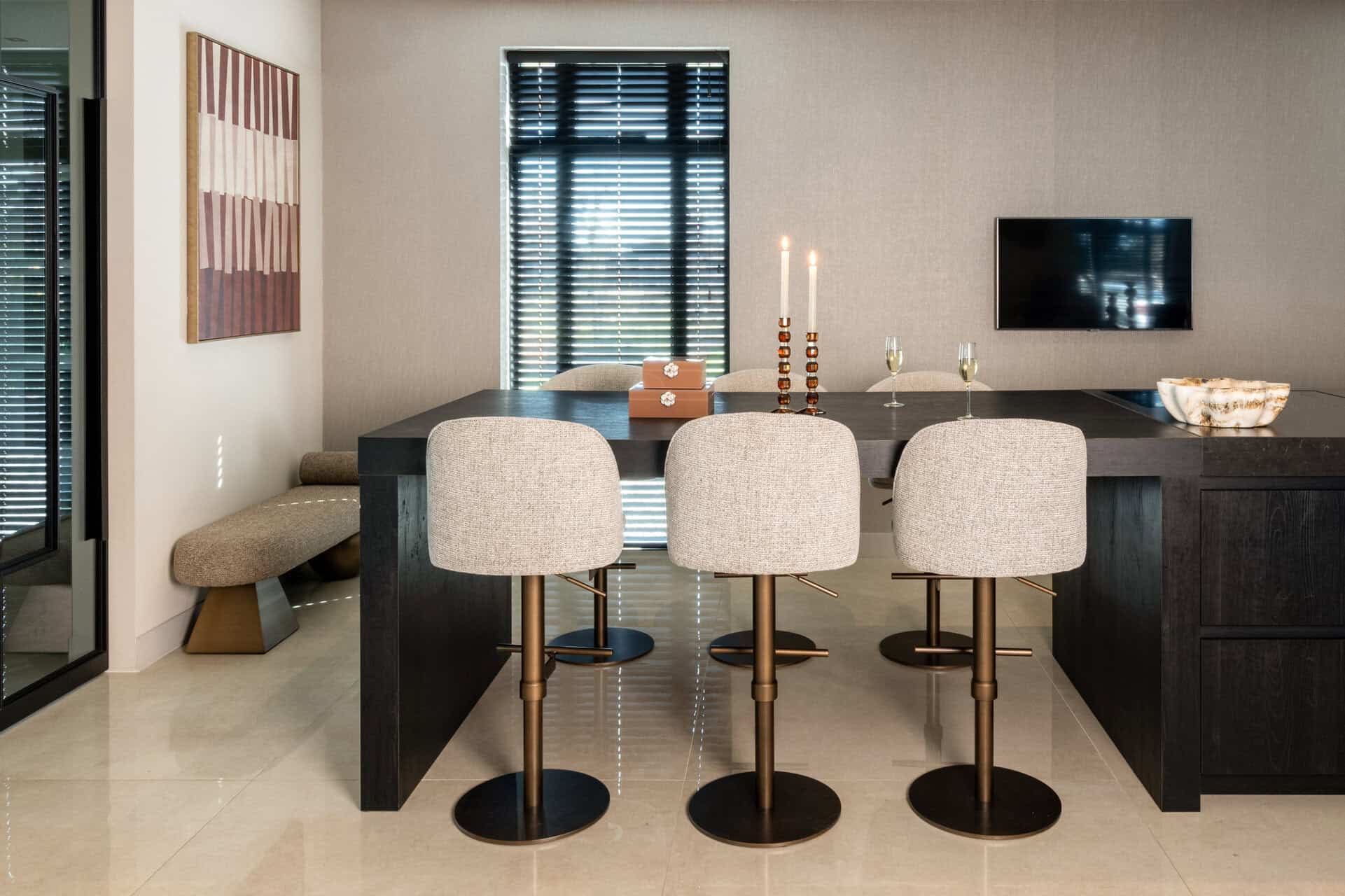
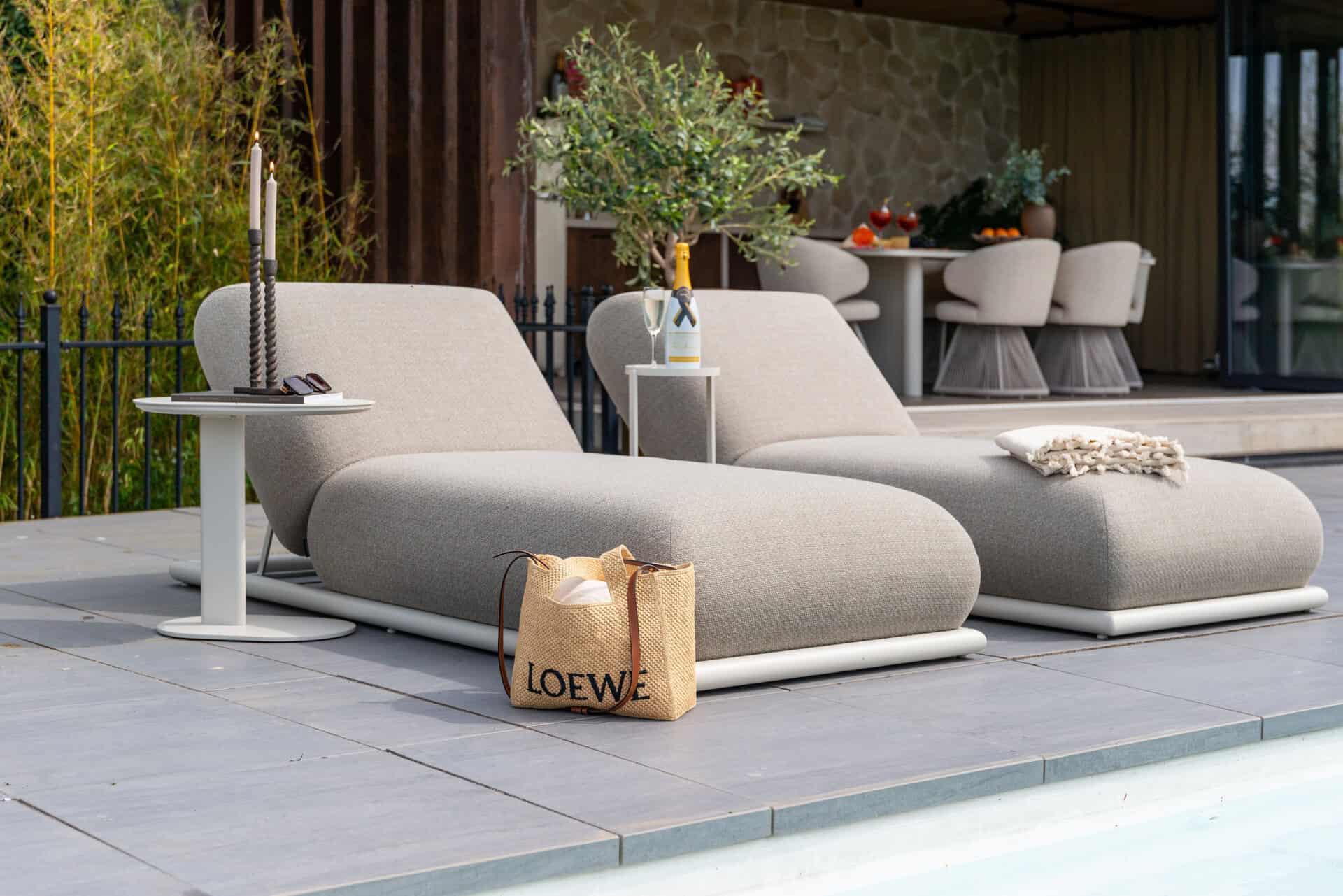
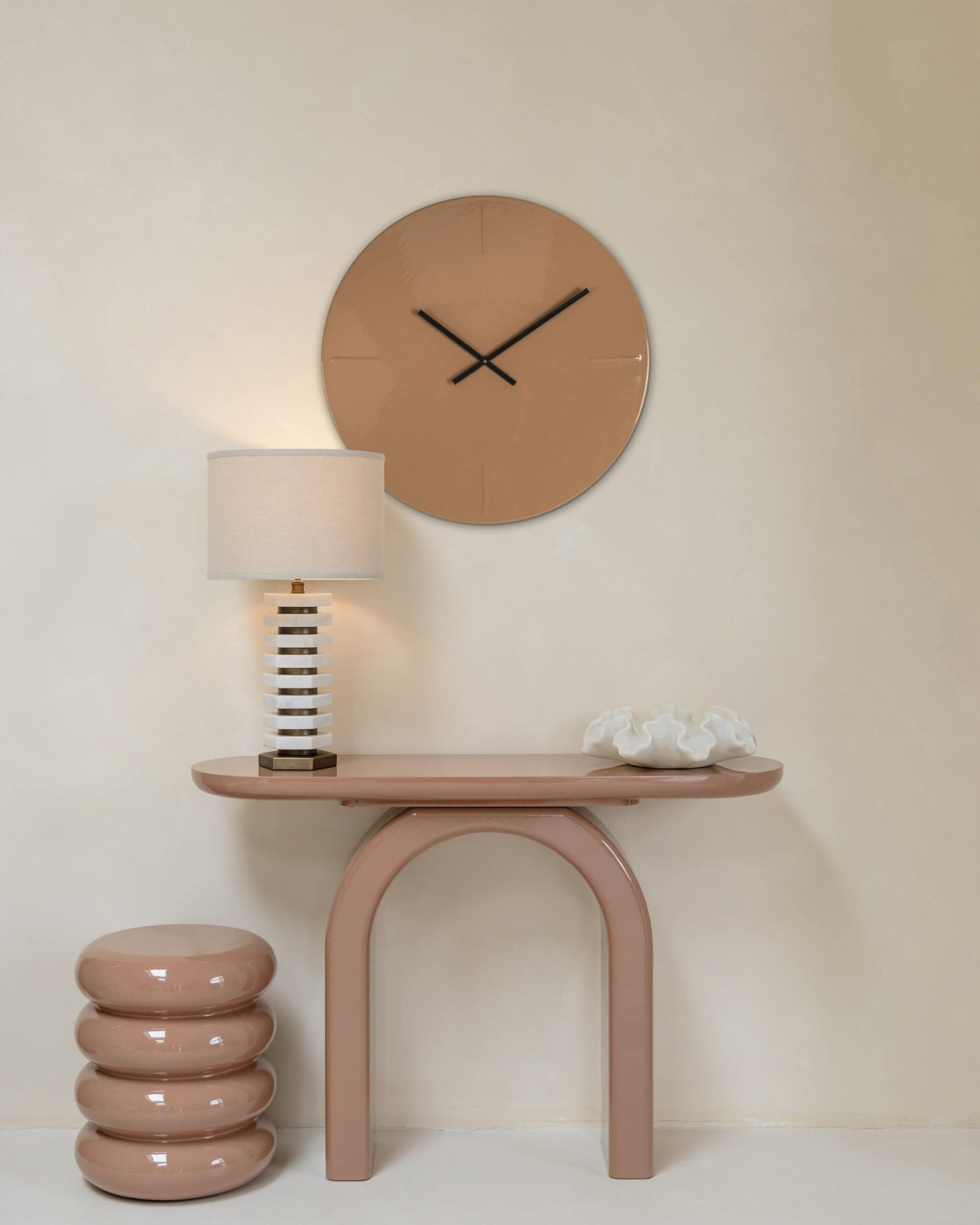
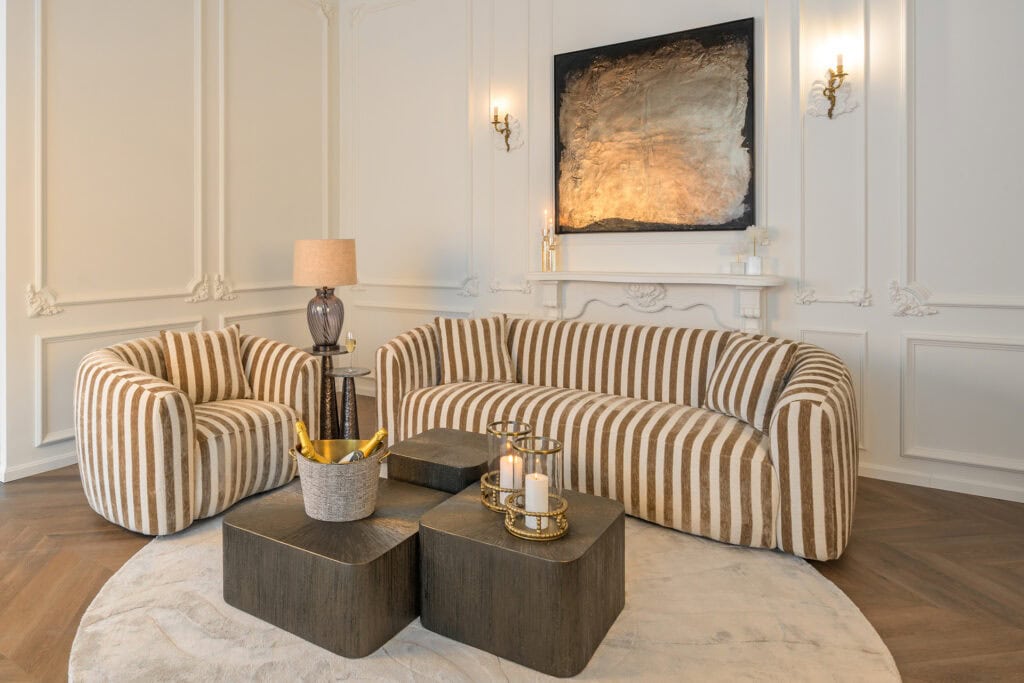
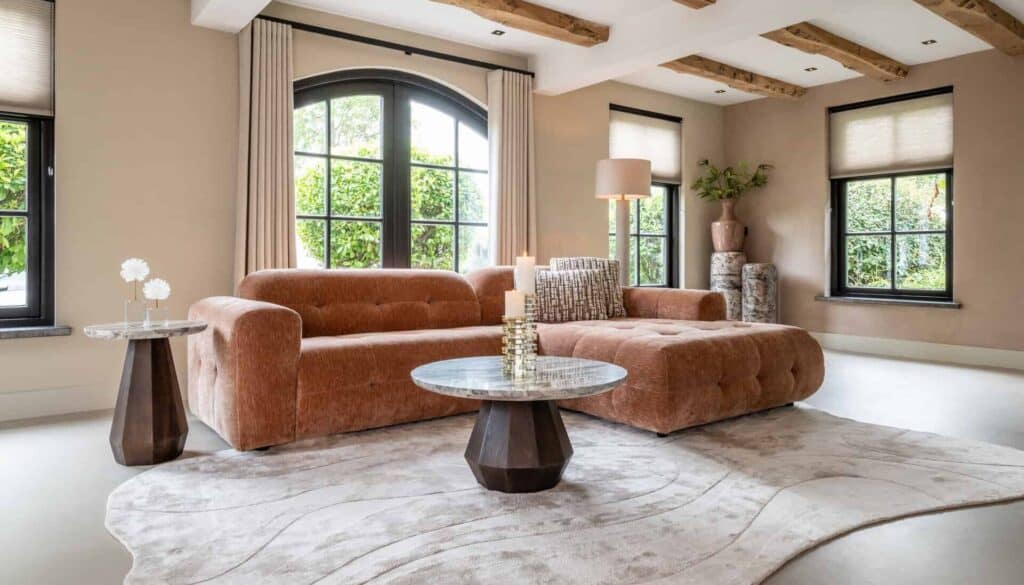
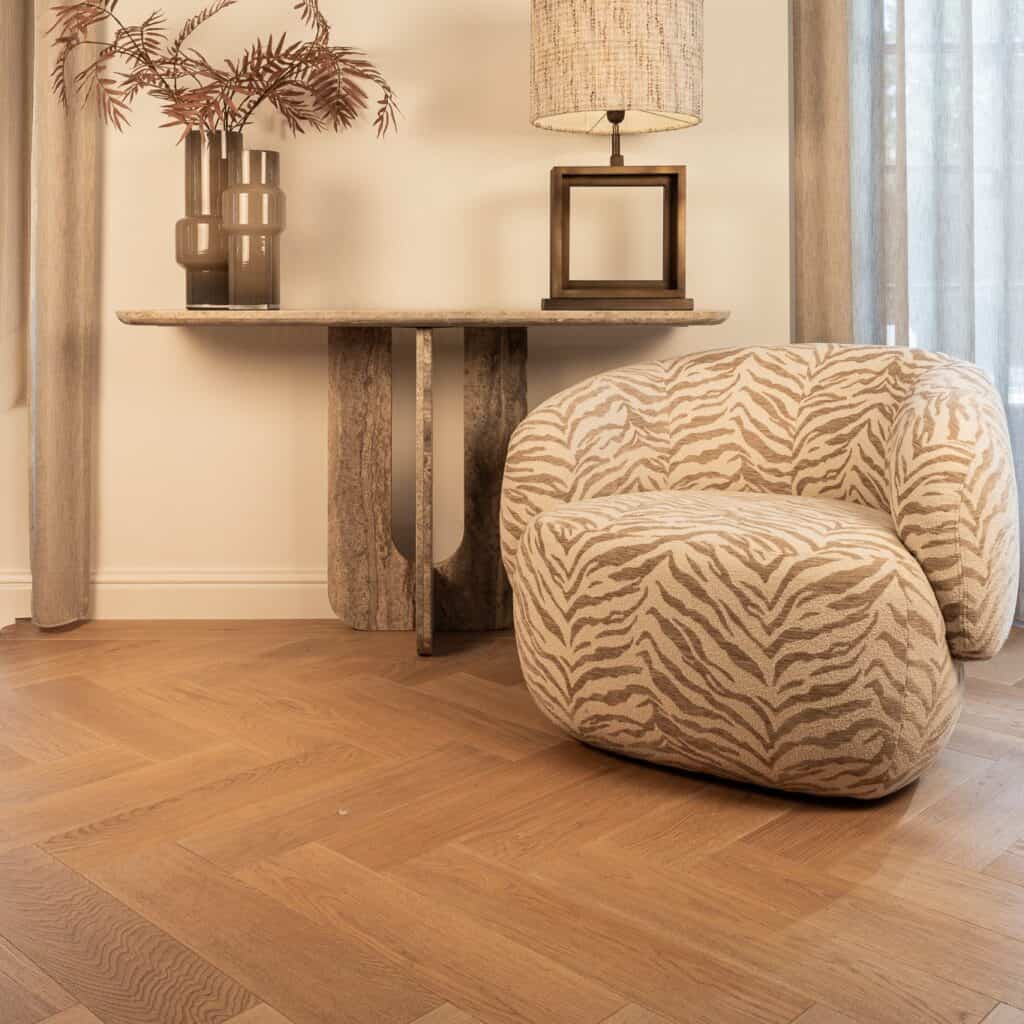
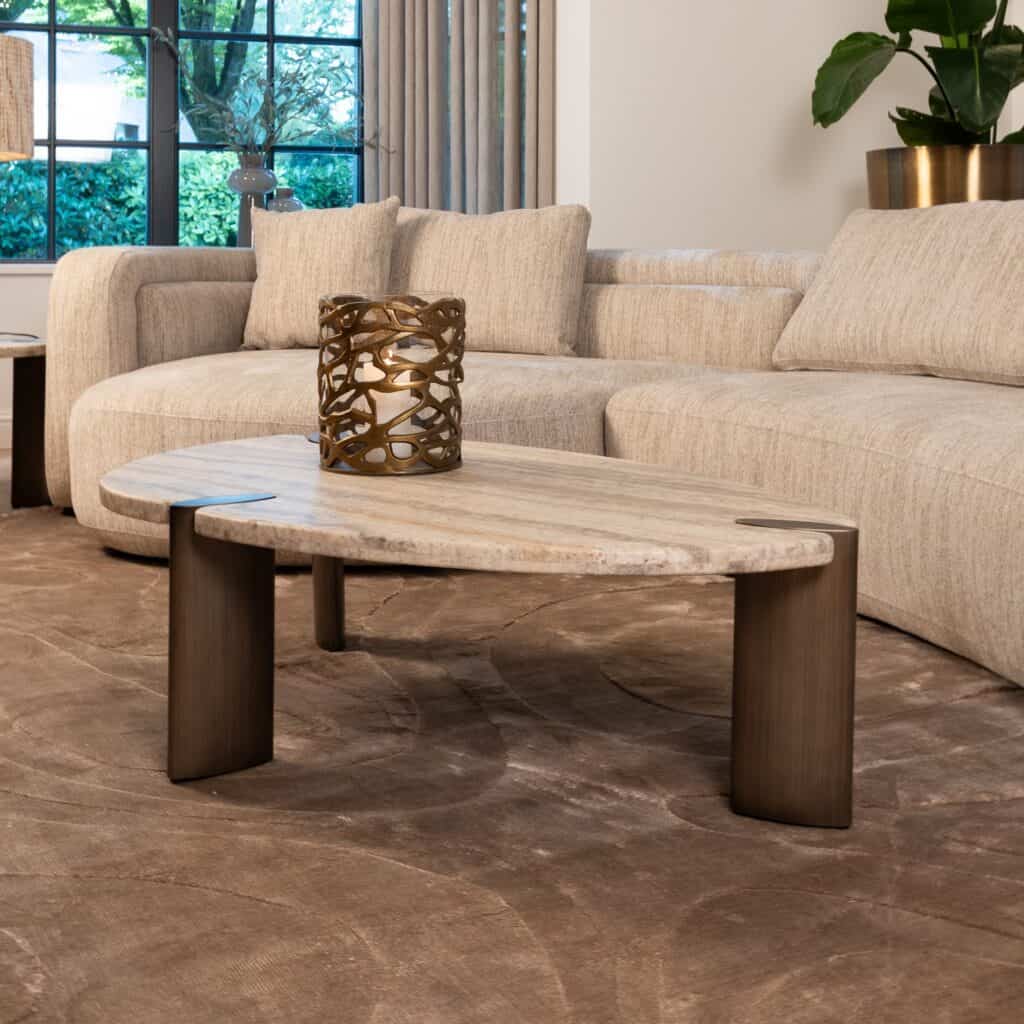
Experiencing furniture in person before making a decision isn’t just a precaution—it’s an essential part of the selection process. Only at a showroom can you truly assess how a piece feels, how it fits into the space, and how the materials and colors react to light. Photos and product descriptions provide a first impression, but they can never replace the experience of sitting, touching, and seeing the furniture in person. In this article, we answer the most frequently asked questions about choosing furniture, from Sofa to dining tables.
What are you missing out on when you browse furniture at Online Only ?
Browsing online is a logical first step, but if you make your choice based solely on what you see on a screen, you’ll miss the physical dimension that determines whether a piece truly fits into an interior. Dimensions only become clear when you see them in a room. Materials only reveal their character when you touch them. And the presence of a piece of furniture—how it reflects light, how it relates to other pieces—is something you feel, not something you read about.
Specifically, here's what you're missing online:
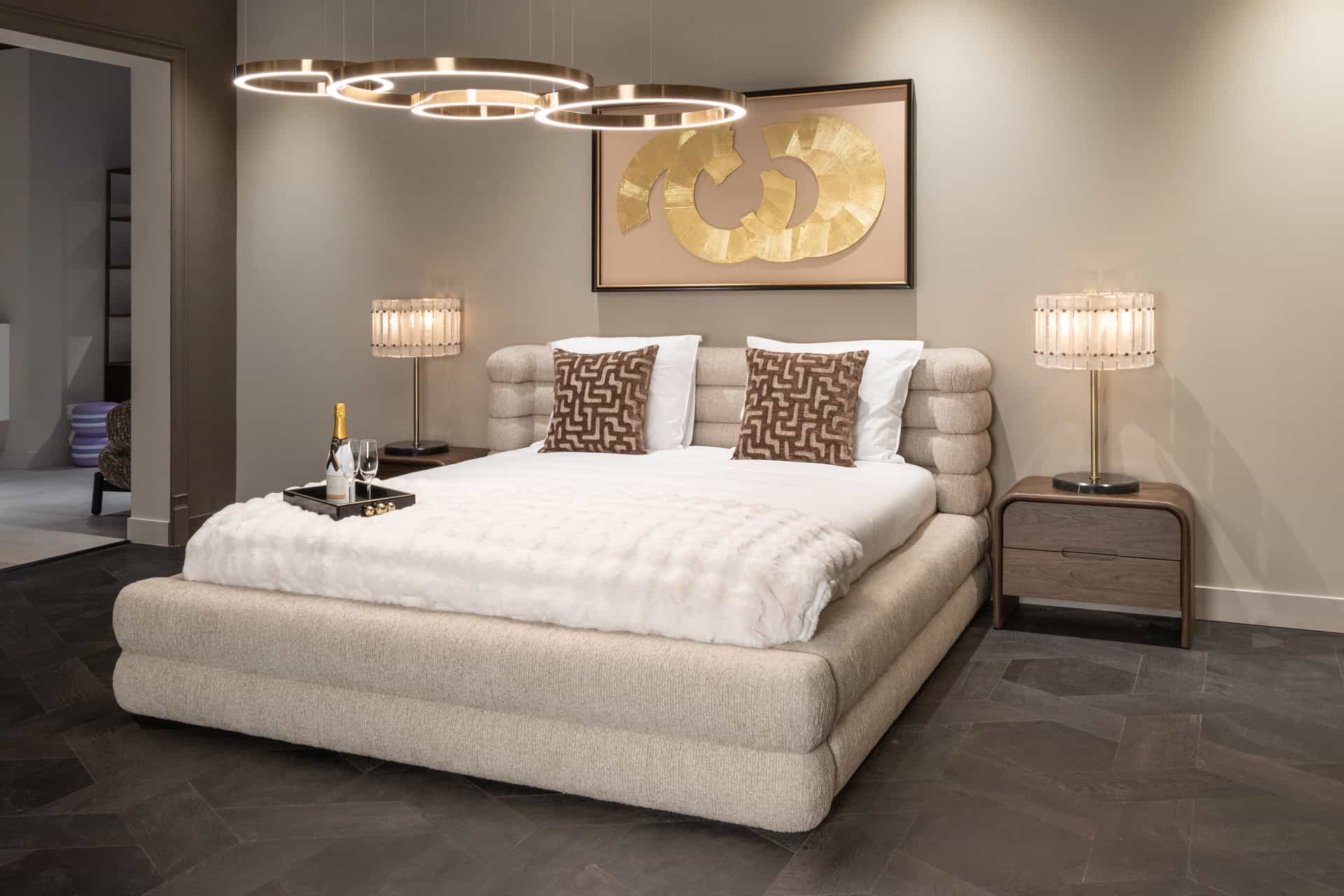
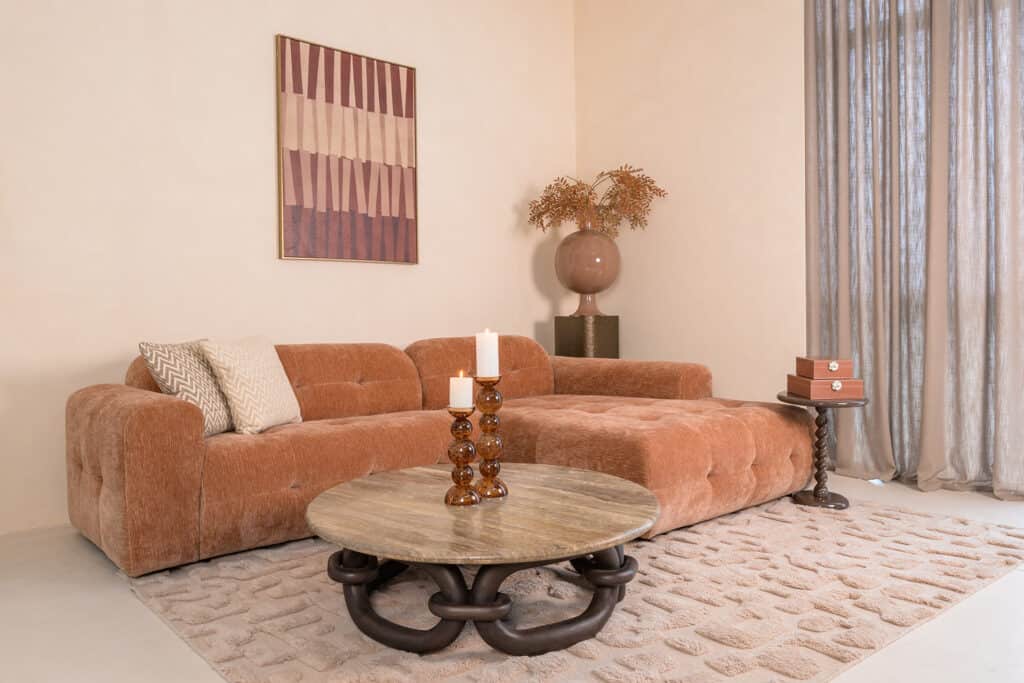
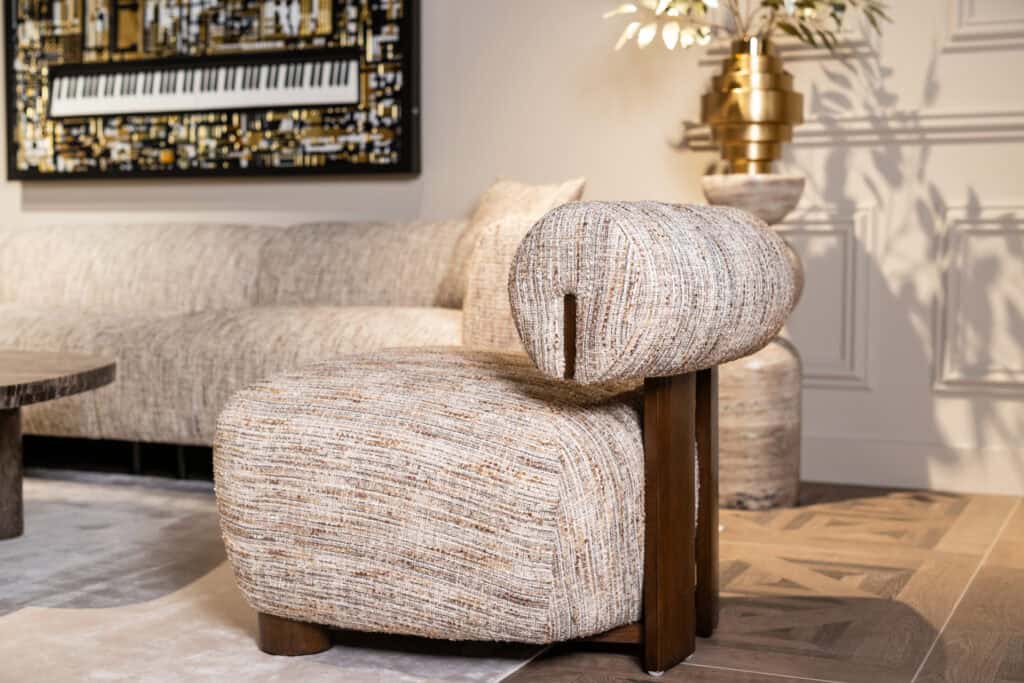
- The comfort of an Sofa or chair. An Sofa may look spacious and inviting in photos, but only when you sit in it will you realize whether the seat depth suits your body, the backrest provides the right support, and the padding has the desired softness. Bouclé feels different from velvet, and velvet feels different from leather—you can only tell the difference by touching them with your hands.
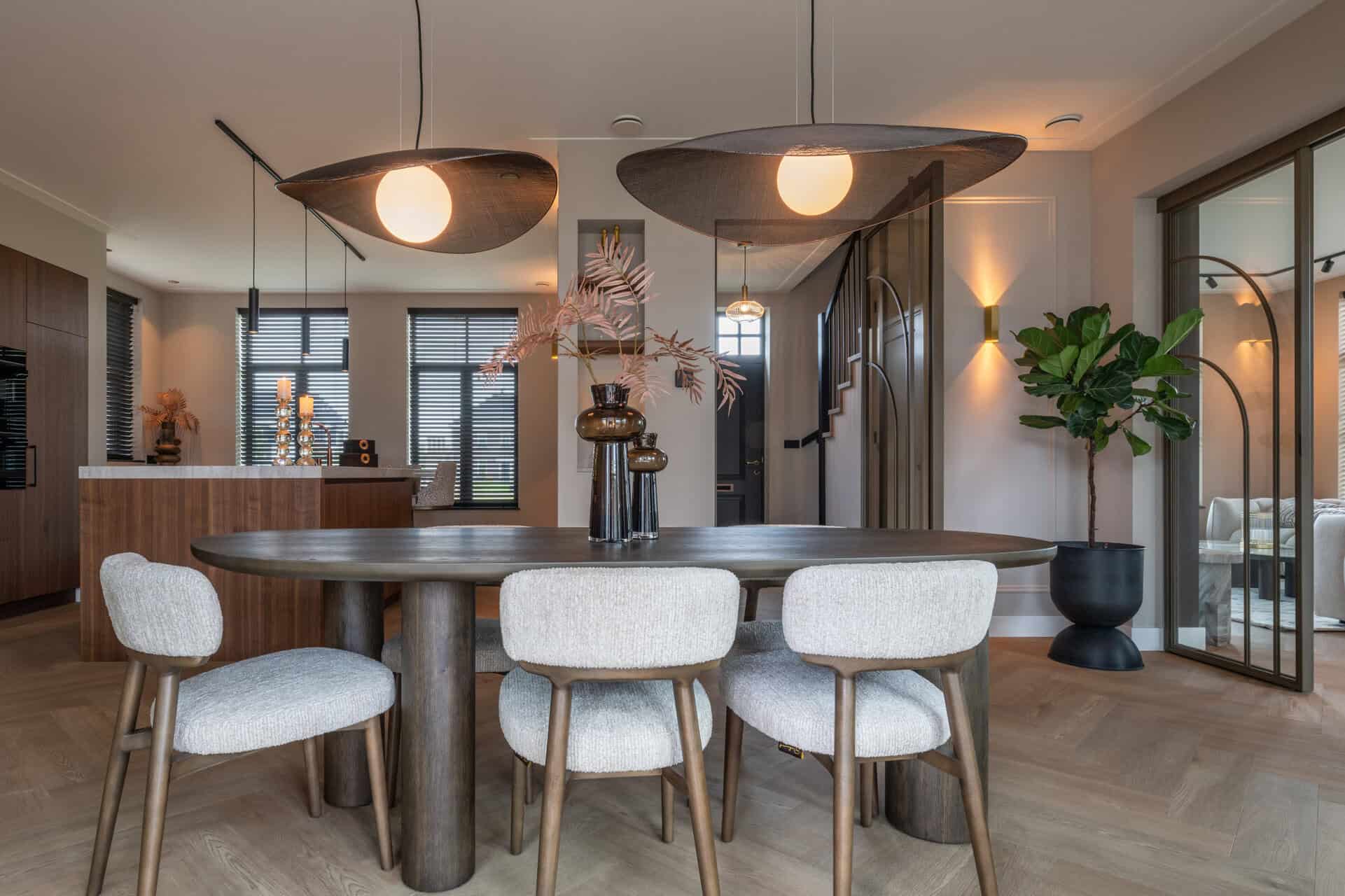
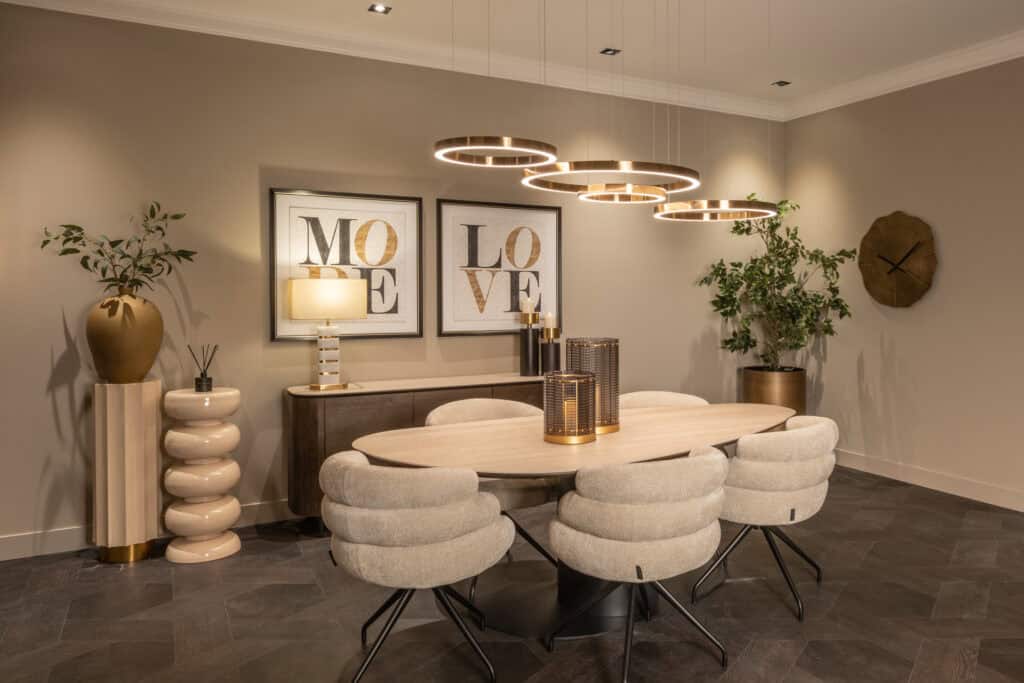
- The actual proportions in a room. Dimensions in centimeters are just abstract numbers until you experience them in a room. A 220-centimeter dining table sounds impressive, but you can only tell whether its presence enriches or dominates a room once you see it in person.
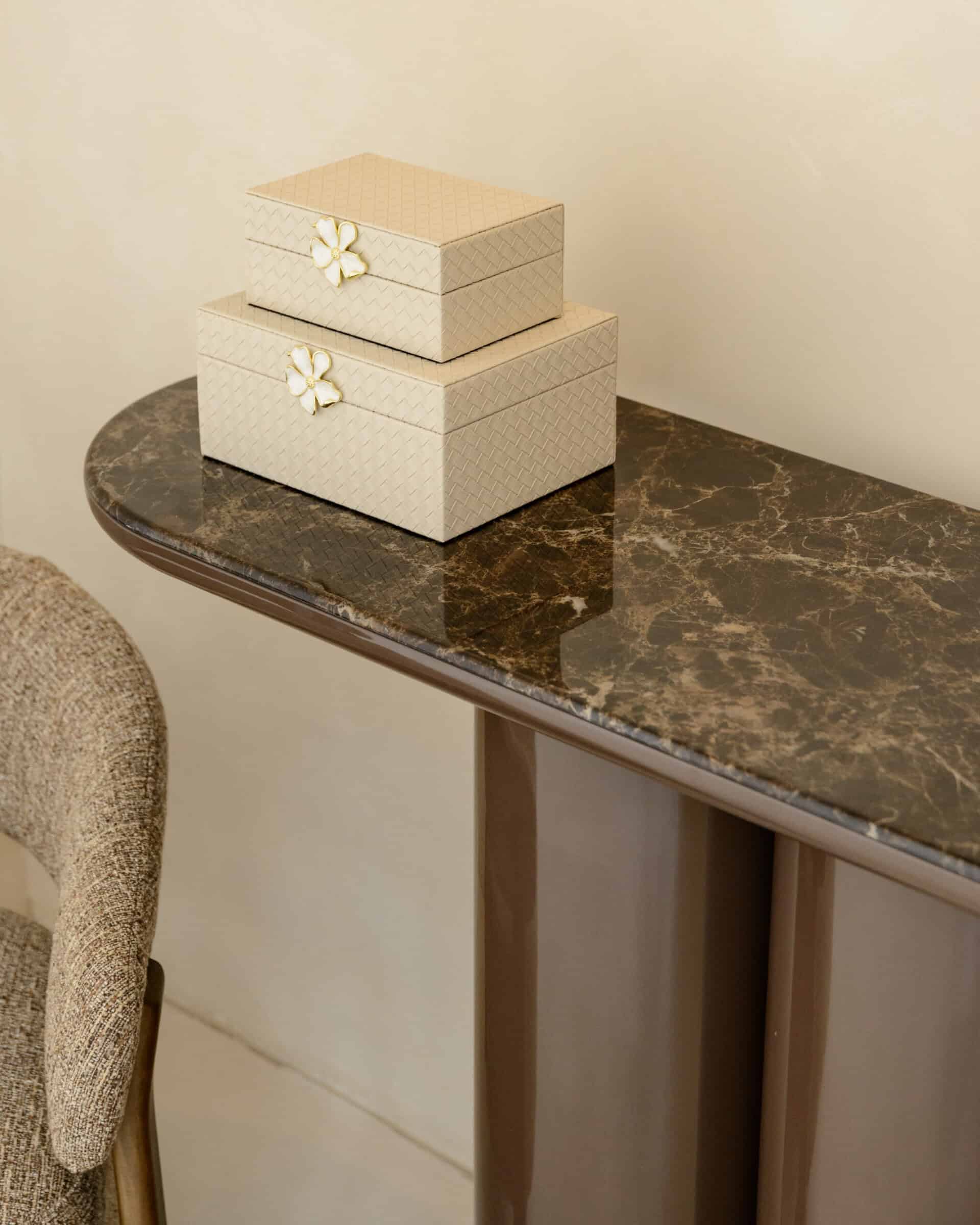
- The quality of the materials and craftsmanship. The thickness of a tabletop, the smoothness of a drawer, the way a brass detail reflects light—these are the elements that reveal craftsmanship. A screen cannot capture them.
- Color in real light. Screens always display colors differently than they appear in reality. Warm earth tones, deep dark blue, or a subtle golden sheen: their true character is only revealed in a realistic lighting environment.
For furniture where materials, proportions, and appearance are key—a Sofa, a bed, a dining table—the physical experience is irreplaceable. This is especially true when you choose pieces that fundamentally define the atmosphere of a room.
How do you know if a piece of furniture will really fit in your space?
A piece of furniture that makes an impression in a showroom must also fit seamlessly into your interior—in terms of size, shape, and proportions. This requires thorough preparation at home as well as the ability to think abstractly in the showroom : looking not only at the piece itself, but also at how it would look in your specific space.
Follow these steps to ensure a good fit:
- Measure your space before you start looking. Write down the width and depth of the room, the distance to other pieces of furniture, and the space you want to keep clear for walkways and sightlines.
- Use tape on the floor at home. Trace the outline of the piece of furniture you want onto your floor. That way, you’ll immediately see how a 280-cm Sofa fits in with the rest of the room—whether it defines the space or actually makes it feel smaller.
- Check the exact measurements at showroom. How do you choose the right dining table? Start by asking yourself how many people need to be able to sit at it, how much space is needed around it to move comfortably, and how the table height relates to the chairs you’re considering.
- Pay attention to the height and visual weight of the furniture. A tall sideboard in a low-ceilinged room can make the space feel cramped. A solid marble tabletop requires a base that visually supports that weight. Proportions determine whether a piece enhances or disrupts a space.
In a “ showroom ,” you can see pieces of furniture side by side and assess how they relate to one another—something that simply isn’t possible online. That’s what makes a visit so valuable when choosing pieces that define the structure of an interior.
Why does the color of furniture look different in a showroom than it does in photos?
Color is not a fixed property—it is an interplay of material, texture, and light. What appears on a screen as a single, unambiguous shade behaves very differently in reality: it moves, it reacts, it changes with the time of day. A visit to the showroom gives you access to that true color experience.
There are a few other factors to consider:
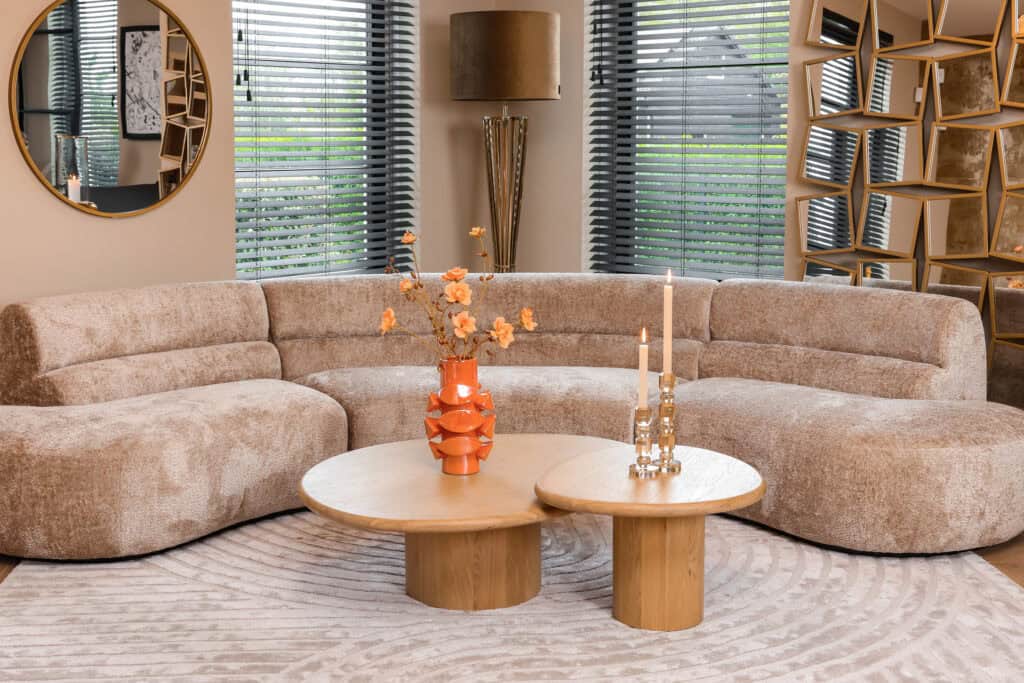
- Natural light versus artificial light. A fabric Sofa that appears sand-colored in photos can take on a golden glow under warm artificial light and look almost gray in cool natural light. In a showroom , you can see how the furniture reacts to different light sources—and how that affects the atmosphere of a room.
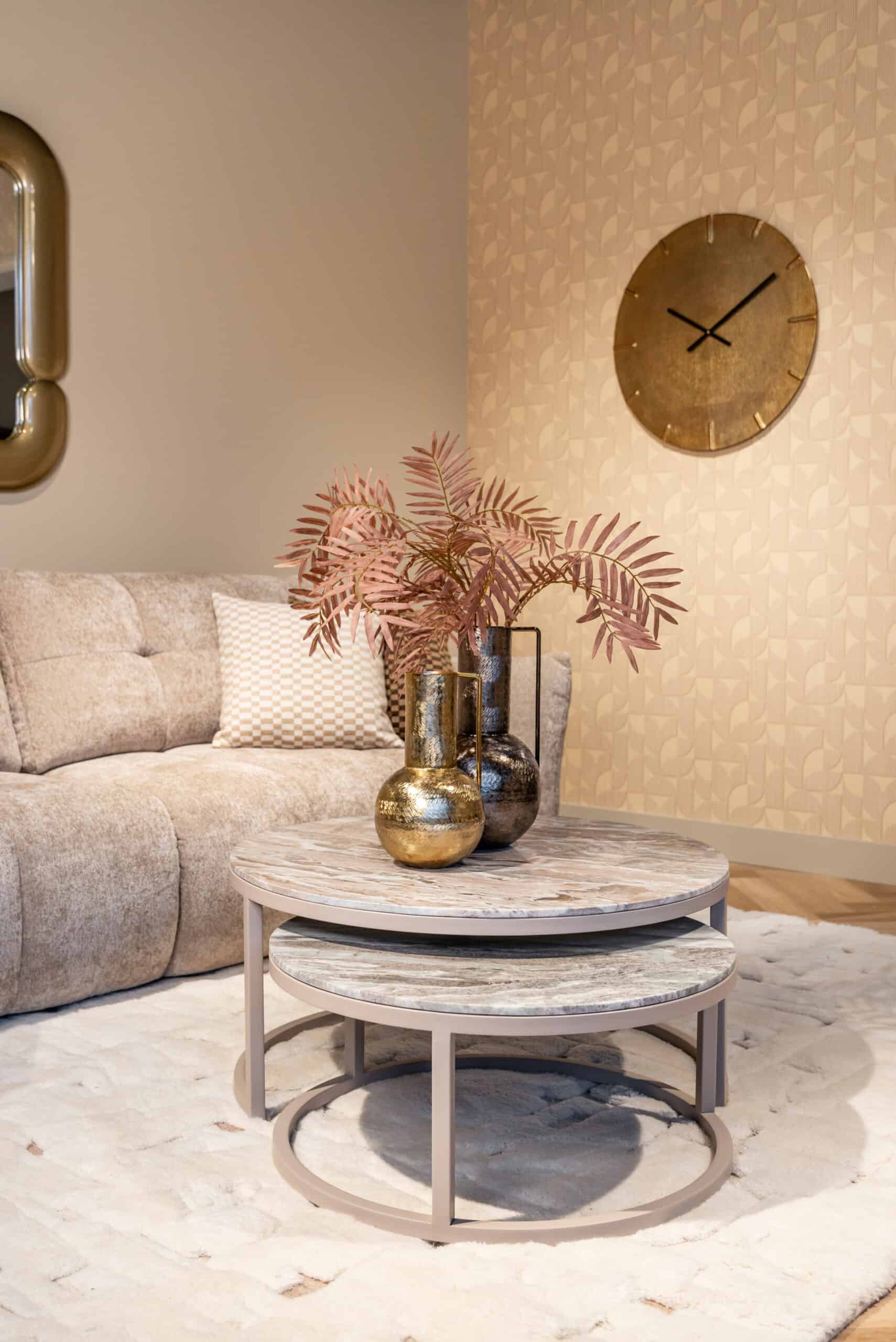
- Texture and sheen are three-dimensional. Bouclé, velvet, or a matte lacquer look flat on a screen. In real life, you can see how light moves across the material, how the texture adds depth, and how the color changes as a result, depending on the viewing angle.
- Color context plays a decisive role. A piece of furniture photographed against a white background looks fundamentally different than when it’s placed next to a warm wooden floor or a dark wall. A color showroom helps you better assess how a color interacts with the materials and shades in your own interior.
Are you unsure about a color or texture? Ask at the showroom if there are any samples available to take home. Only in your own lighting conditions can you see how a shade truly looks next to your floor, walls, and existing furniture.
What questions should you ask when looking at furniture at a showroom?
A visit to a showroom is most valuable when you approach it as a conversation about interior design, not as a transaction. Asking the right questions will help you make the right decisions—about materials, proportions, finishes, and how a piece will age over time.
These are the most valuable questions to ask:
- What are the exact exterior and seating dimensions? Don’t just ask about the width—also ask about the seat depth, seat height, and backrest height—which together determine the piece’s comfort and visual proportions.
- What fabrics or finishes are available? Many pieces of furniture are available in multiple styles. Ask if you can take some samples home to compare them in your own lighting conditions.
- How do you care for the materials? Leather, bouclé, marble, and wood each have their own character and their own care requirements. Understanding what each material requires is part of making an informed choice.
- What is the delivery time? Delivery times can vary, especially for models available in multiple finishes. Be sure to coordinate this with any renovation or interior design plans you may have.
- Will it fit through my door and up my stairs? Large pieces of furniture require logistical planning. Ask if the item can be disassembled and what the smallest clearance size is for delivery.
- Is this model part of a larger collection? If you want to expand your collection later or mix and match furniture, it’s helpful to know what other pieces are available in the same line and how they complement each other.
A good consultant at showroom works with you to determine which combinations enhance a space and how materials and shapes complement each other—that conversation is just as valuable as the furniture itself.
When does it make sense to browse for furniture online?
Online research is clearly valuable in the early stages of the selection process: it gives you an overview of collections, styles, and materials, and helps you determine which direction you want to explore. The final choice—especially for pieces that set the mood of a space—always requires a hands-on experience.
There are situations in which online exploration works well:
- You've already experienced the model at a showroom . If you've already physically examined a Sofa, table, or chair and decide to choose the same model, the next step online is a logical one.
- These are accessories or smaller decorative items. A mirror, a vase, a Carpet , or a lamp are less dependent on the physical experience of comfort and proportions.
- You're already familiar with the collection and the materials. Anyone who knows a brand's style and craftsmanship from personal experience knows what to expect with a follow-up purchase.
- You can use it for inspiration and preparation. Exploring online collections is an excellent way to make your showroom visit focused and efficient.
For furniture where material, color, comfort, and proportions are key—a Sofa, a dining table, a bed—the real decision-making process doesn’t begin until you’ve seen and felt the piece in person. Browsing online is just the first step; the showroom is where your interior design story truly comes to life.
How Richmond Interiors Helps You Choose the Right Furniture
Creating an interior that feels just right—both in style and atmosphere—requires more than just good taste; it requires knowledge of materials, proportions, and the way furniture interacts with each other and with the space. Richmond Interiors brings this world together in collections that combine craftsmanship, elegance, and a keen sense of timeless design.
Here's how we help you make your choice:
- An extensive product lineup featuring furniture in a wide variety of styles, from hotel chic and Hollywood Regency to organic and Japandi
- Collections featuring contemporary materials such as bouclé, travertine textures, and warm earth tones with gold accents
- Furniture that complements both modern and classic interiors, with an eye for detail and durable finishes
- A " Experience Center " in Heerhugowaard, open Monday through Saturday from 10:00 a.m. to 4:30 p.m., where you can see and experience the furniture in person
- Available through a wide network of selected retail locations in the Netherlands and abroad
Would you like to see the collection in person or learn more about a specific piece? Please contact us or visit us at Experience Center to schedule a personal consultation with one of our advisors.